Gear · Reserve

Repacking your reserve parachute in paragliding: when, how, where

A reserve parachute should be repacked once a year, even if it has never been used, and sooner if it has been thrown or got wet. In Gréolières, the Aerotech workshop, where Pierrot, the founder of Ailéments, works, repacks every type of reserve: allow from one day to one week depending on the season, with the turnaround confirmed when you book. You drop it off at the workshop or send it by parcel.

  • Once a year
  • Every type of reserve
  • Drop-off at the workshop or parcel
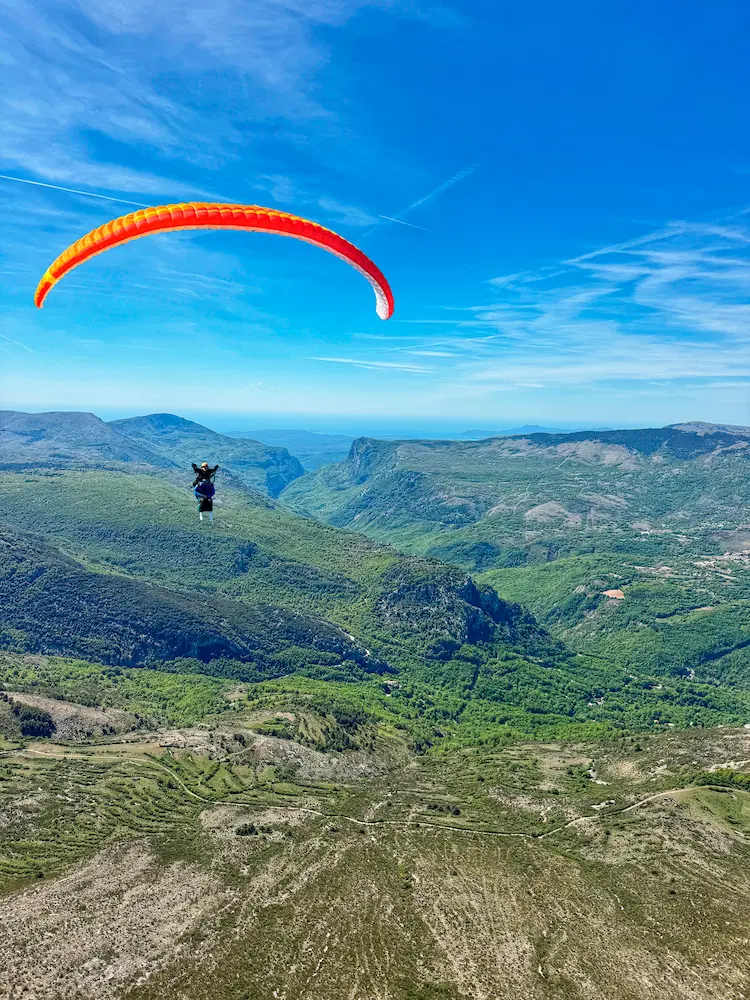
Paraglider pilot flying in a pod harness, seen from their own camera, yellow wing above the landscape A reserve ready to open
  • How oftenOnce a year
  • Turnaround1 day to 1 week
  • ReservesRound, square, Rogallo
  • WorkshopAerotech · Gréolières
  • Far from the 06Send it by parcel
The stakes

Why repack your reserve every year

A reserve is only used once, but on that day it has to open fast.

Left folded for months at the bottom of the harness, it settles: the fabric sticks, it takes on moisture and it opens more slowly. Repacking means opening it out completely, airing it, changing its line-stowing elastics and giving it back its shape.

The FFVL recommends having your reserve repacked at least once a year, even if it has never been used. At Ailéments, that is the rule: once a year. The easiest way is to set a fixed date for it, together with the servicing of your paraglider.

An Ailéments instructor in the school's T-shirt guiding a student in a helmet, rucksack on her back, an orange wing laid on the ground
Without waiting

When to have it repacked outside the yearly appointment

Some cases cannot wait for the anniversary date. Have your reserve repacked before flying with it again in these four situations.

After a deployment

Even if everything ended well, a reserve that has opened goes back to the workshop before it returns to the harness. If your wing went through the incident too, have it checked as well: our paraglider servicing page explains why.

If it got wet

A water landing, a downpour, a rucksack that stayed damp: a wet reserve does not dry while folded in its container. The workshop opens it and airs it before repacking it.

When buying second-hand

You know neither when nor by whom it was last packed. Have it opened and repacked before your first flight with it, and keep the workshop's report.

When changing harness

The reserve is fitted into the container of the new paragliding harness, or into a front container. The workshop installs it, checks the fitting and tests the extraction.

You cannot find the date of the last repack? Assume it needs doing again.

At the workshop

How the workshop repacks your reserve

At the Aerotech workshop, the procedure is the same for every reserve, and the repack follows the manufacturer's manual for your model. Pierrot does servicing, repairs and reserve repacking there.

Fully opened

The reserve comes out of the harness and out of its pod, the inner bag that holds it, then it is laid out completely.

Aired for 24 hours

It stays open for a day: the fabric unsticks and regains its volume.

New elastics

The line-stowing elastics, which keep the lines in place, are changed at every repack.

Repacked in the pod

The reserve is repacked following its manufacturer's manual, then stowed in its pod.

Fitting and extraction

The fitting is checked, then the extraction is tested with the handle.

Report

An intervention report comes back with your gear.

Two services can be added to the repack: installing the reserve in the harness or in a front container, and a visual and hands-on inspection of the reserve, with its report. Prices are on the Aerotech workshop's price list, and the amount is confirmed before the work starts.

Your model

Round, square, Rogallo: each reserve has its own repack

The workshop repacks every type of reserve. The procedure does not change from one type to another: only the packing time varies, and therefore the price.

Types of reserve parachutes and their packing time
Type of reservePacking timeDetails
Hemispherical (round)The shortestThe most common reserve
SquareLongerClassic square canopy
ComplexThe longestRogallo, the steerable reserve, and square without a pull-down line

The type of your reserve is given in its manual. Not sure? Give the make and model when you book: the workshop will tell you. To find out which reserve parachute to choose before buying, see our guide: shapes, sizes and prices.

At the school

On an Ailéments course: reserve briefing and checked gear

On a course, the reserve parachute is part of the programme: every course includes a reserve briefing.

If you bring your own gear, the registration form asks about the state of your reserve: repacked less than 12 months ago, due for a repack, or no reserve. For a supervised flying day, a complete set of gear is compulsory, harness and reserve parachute included, and it is checked in the morning: gear that does not comply does not fly.

The programme of each option is on our paragliding courses page, and our paragliding safety guide brings together the other good habits.

A paragliding course student in a helmet and harness, lines in hand, listening to an instructor on the take-off area
The gesture

Repacking your reserve yourself: a skill to be learnt

Learning from a professional

Each model is packed following its manufacturer's manual, with its own order and markers, and a botched repack can delay the opening. If you want to do it yourself, learn it from a professional, with your reserve's manual in hand.

What the workshop does on top

On top of the repack, the workshop changes the elastics, checks the fitting in the harness, tests the extraction and gives you a report. To fold your wing, see our paraglider folding guide.

In the same visit

Wing, harness and reserve, in one go

Bring everything together: the workshop services the wing, inspects the harness and repacks the reserve. Has your wing been damaged? Our paraglider repair section explains how a repair works.

Flying in Gréolières? Our Gréolières paragliding shuttle takes you up to the take-offs. No reserve yet? Our advice is on our buying a paraglider page.

Contact us
FAQ

Frequently asked questions about reserve repacking

How often, price, turnaround, deployment, wet reserve, lifespan.

How often should you repack your reserve parachute?

Once a year, even if it has never been used: the FFVL recommends at least once a year. Also have it repacked without waiting after a deployment, if it got wet, when buying second-hand and when changing harness.

How much does it cost to repack a reserve parachute?

The price depends on the type of reserve: the procedure is the same, but the packing time differs between a round, a square and a Rogallo. Prices are on the Aerotech workshop's price list, and the amount is confirmed before the work starts.

How long does the workshop keep my reserve?

From one day to one week, depending on the time of year. The turnaround is confirmed when you book. The reserve stays open for 24 hours to air before it is repacked.

Where can you have your reserve repacked in the Alpes-Maritimes?

At the Aerotech workshop, in Gréolières. You drop your gear off at the workshop, or send it by parcel from anywhere in France: the shipping label is created online with the service request.

Can you repack your reserve parachute yourself?

It is a skill to learn from a professional, with the manufacturer's manual in hand: each model has its own order and markers. Otherwise, leave it to the workshop, which also changes the elastics, checks the fitting and tests the extraction.

What should you do with your reserve after a deployment?

Do not put it back in the harness as it is: take it to the workshop so it can be opened, aired and repacked before your next flight. If your wing went through the incident too, have it checked as well.

My reserve got wet: what should I do?

Have it repacked without waiting: a wet reserve does not dry while folded in its container. The workshop opens it out completely and airs it before repacking it.

How long does a reserve parachute last?

The manufacturer sets its lifespan, in your model's manual. To have the state of the fabric and lines checked, ask for the visual and hands-on inspection of the reserve at the same time as the repack.

In summary

The key points on reserve repacking

3 points to remember.

  1. 1

    Once a year

    Even if it has never been used, and sooner after a deployment, if it got wet or was bought second-hand.

  2. 2

    A complete procedure

    Opening, airing for 24 hours, new elastics, repacking, extraction test and report.

  3. 3

    In Gréolières or by parcel

    At the Aerotech workshop, from one day to one week depending on the season.