Safety · Paragliding

Paragliding safety: the rules, the equipment and the feel

Flying safely is not about checking off a list of rules: it's about having the right approved and revised equipment, choosing the right conditions, and above all, having the right feeling—the feeling that comes from practice. The Paragliding Safety Guide has been available from our DEJEPS and BEES instructors Gréolières since 2013.

  • Rules & best practices
  • Approved & serviced equipment
  • Feeling through practice
  • DEJEPS and BEES instructors
Parapentist calmly flying solo above the reliefs of the Alpes-Maritimes, sea on the horizon Flying calmly, flying safely
  • To formIn school, never alone at first
  • HardwareApproved, adapted, serviced
  • ConditionsAdapted to their level
  • In flightMargin and active piloting
  • The secretThe feeling, through practice

Paragliding safety is not just a set of instructions on a poster. The rules are essential—they lay the foundation—but they alone do not make a safe pilot. What makes the difference is everything that is built around it: the right equipment, the right judgment, and the feeling.

Paragliding is a sport that is taken very seriously. One flies in it with all the more safety if one has practiced a lot: the body eventually acts because it feels it, even before it thinks about it. This parapant safety guide addresses the three pillars — the rulesthe Approved and serviced equipment, and the feeling — without any pretense.

It is written by the Ailéments team, paragliding school at Gréolières (06) since 2013. Our state-certified instructors (DEJEPS and BEES) transmit safety every day, from the first inflation to autonomous flight: for us, it is first and foremost a culture, not a requirement.

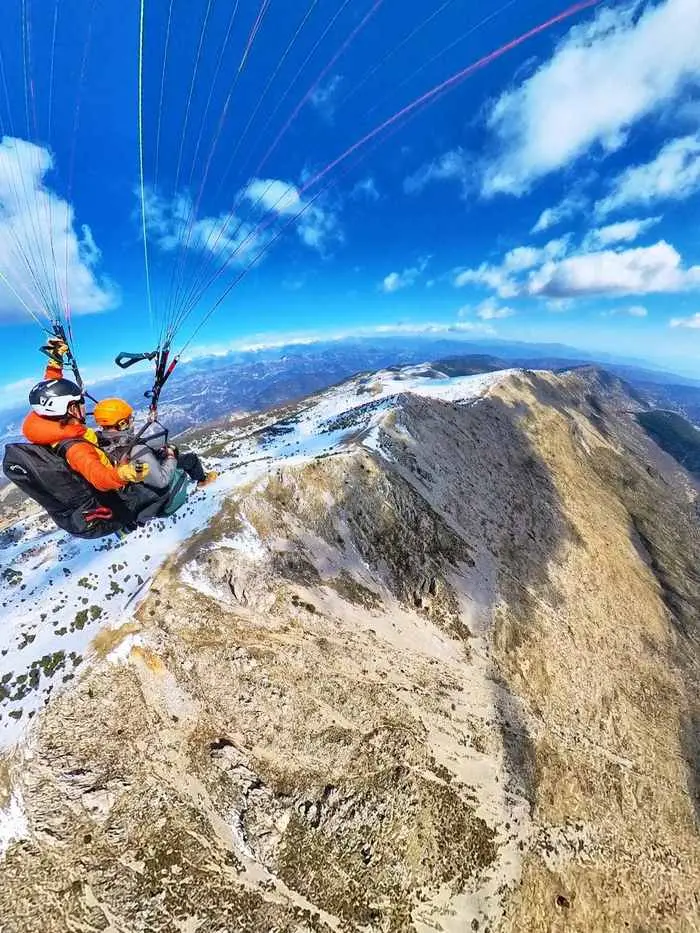
Educational tandem flight, instructor and student wearing helmets above a ridge, Ailéments
The foundations

Basic safety rules

These are the non-negotiables: they do not guarantee everything, but without them, nothing holds together. We apply them from the very first day and throughout our entire lives as pilots.

To form

In school, supervised

We don't learn alone: we begins in school with an instructor, and you don't fly autonomously until the pilot certificate He did not validate it. Even if it is confirmed, it is better to avoid flying completely isolated.

Choosing your air

Suitable conditions

Flying in planes conditions suited to their level, and to eliminate any doubt. Most incidents are due to poorly assessed weather, not to bad luck. Read more'aerology is a security competency.

The sport

Margin, takeoff, protections

Keep some margin (height, speed, distance from terrain and other pilots), do a full check before every take-off, respect airspace, and wear protective gear in good condition: helmet, back protector, reserve parachute.

Pillar n°2

Approved, adapted… and serviced equipment

Safety comes down to equipment, but not in any way that's not appropriate: it must be approved, of the appropriate standard, and maintained. A wing in good condition will forgive; a wing that's worn out or too demanding, not so much.

Approved

To the standards, to its level

Family, harness and Helmet approved (EN/LTF standards), and especially adapted to his experience : a wing that is too demanding is a danger, not a shortcut. The right equipment is the one that corresponds to your level.

The reserve

A recent parachute

The reserve parachute is the last line of defence: it must be fitted, suited to your weight and repacked regularly so it opens fast on the day you need it. You never fly without one, and you never neglect its repacking.

Serviced

Checked in the workshop

A wing ages and becomes less safe: this is why it is important to have a regular review. Monitor the life span and to check the porosity is to steal from a secure material. Our workshop Aerotech, at Gréolières, takes care of that.

Pillar n°3

Active pilot, managing the unexpected

A well-controlled wing is a safe wing. In the air, you don't suffer: you anticipate, you balance, you keep the wing above yourself.

In the air

Active piloting

Keeping the wing pressurized, damping the pitching and rolling, anticipating the movements of the air: the active steering It warns of closures. It is this competence that transforms a situation of turbulence into one that can be managed.

Managing the incident

Knowing how to react

Even when well managed, an incident can occur. Having already experienced a closure or a disengagement under safe and supervised conditions changes everything: that is the very purpose of Stage SIV, Above the water, which instills good reflexes.

The heart of the matter

The feeling: when the body acts because it feels

That's the pillar that the lists of rules forget, and yet it's the most important one. You don't fly only with your head: you fly with your body, and the body reacts because it feel.

Our conviction

Security is a feeling

The good pilot does not calculate every move: he feels the wing in his hands and his seat, and corrects before he has had time to think. This feeling — what we call the feeling — it is not learned in any book. It is built up through repetition, until the wing becomes a natural extension of the body. It is he, after all, who holds the security in flight.

Work on the ground

Inflating, the school of feeling

The best place to build this feeling is the ground. Inflating, controlling the wing above your head, feeling it react to the wind: every change of pressure in the risers teaches you something, without the risk of height. The Dune du Pilat, with its sand and steady wind, is a temple of ground handling. We firmly believe in this daily work on the ground: the more you play with the wing, the more natural, and safe, the movement becomes.

Our approach

Security, a culture at Ailéments

Tandem flight or autonomy: safety is passed on by instructors who fly every day and have made it second nature.

Tandem flight

Under the eye of the instructor

Visit first tandem flight, It is the state-certified instructor who decides, pilots and ensures the safety of the entire flight. The safest way to experience the sky, without having to manage anything.

Training

Security from the ground up

On a course, safety is built in order: inflation and ground handling, take-off, active piloting, reading the air. Every flight is guided by radio and debriefed, to anchor the right movement.

Our plot of land

Gréolières to progress

Between the sea and the mountains, our sites in the Alpes-Maritimes offer varied conditions for learning to fly safely, under supervision, and preventing rather than curing — the opposite of a simple list of rules. Prevention also means knowing the causes of the accident.

The Ailéments School

Security is not something to be repeated; it is something to be experienced.

Since 2013 at Gréolières, the team Ailéments transmits a culture of safety: clear rules, approved equipment, and serviced on site with our workshop Aerotech, and especially the feeling which is acquired through the course of inflatations and flights. This feeling also fuels dynamic flight as well as the wing over.

State-certified instructors (DEJEPS and BEES), progressive pedagogy, safety first: over 1291 5/5 reviews It confirms it. The sky is worth it, and it is even more enjoyable when you are at peace there.

Learn with us
Panorama of the reliefs of the Alpes-Maritimes under the cumulus clouds, a flying field Ailéments
Frequently asked questions

Your questions about safety in skydiving

Rules, equipment, feeling, getting started: concrete answers.

What are the basic safety rules?

Learn to paraglide in a school and do not fly alone at first, fly in suitable conditions, keep a margin, run a full check before every take-off, respect airspace and wear protective gear in good condition. Beyond the rules, safety is built on feel.

What equipment is needed to fly safely?

A equipment approved (EN/LTF standards), adapted to its level and serviced. Approved wing, harness and helmet, a recent reserve parachute, and a wing whose life span via a Service regular.

What is the «feeling» in paragliding?

It is the feeling that allows the body to act before it even thinks about it. The pilot feels the wing in his hands and his seat, and reacts because he feels it. This feeling is acquired through practice — especially the work on the ground, the inflation — until the wing becomes an extension of the body. That's the heart of safety.

How to acquire the feeling and progress?

By practicing a lot, especially at soil. The inflatable allows you to feel the wing and to gauge your movements without the risk of heights — the Dune du Pilat is a well-known example. The more you inflate, the more natural the movement becomes. Our courses they make a large place for this work on the ground.

Is it possible to do paragliding alone when you're just starting out?

No. You always start at a school, under supervision, and you do not fly on your own until the pilot certificate has confirmed your autonomy. The first tandem flight, on the other hand, is entirely the instructor's responsibility.

Is paragliding dangerous?

Practised with solid foundations, it is a controlled activity. The risk is reduced by certified, serviced equipment, well-chosen conditions and the feel you gain through practice. Many incidents come from overconfidence or a misjudged forecast, not from bad luck: the FFVL 2025 accident report often cites how conditions were assessed, whether the wing suited the pilot, and over-motivation.

Written by the team Ailéments — paragliding instructors & canyoning

Paragliding school based in Gréolières (06) since 2013. Our state-qualified instructors (DEJEPS and BEES) make safety a culture, from your first inflation to your first solo flight: clear rules, regularly serviced equipment and a feel for the air passed on through practice.

DEJEPS and BEES instructors Since 2013 State-qualified +1291 reviews 5/5
The essentials

Paragliding safety: what you need to remember

Four guidelines for flying calmly.

1

The rules lay the foundations

Training as a pilot, flying under your own conditions, keeping a margin of safety, checking before each flight. Indispensable, but not enough on their own.

2

The equipment: approved and serviced

At its level, by its standards, with recent assistance, and controlled regularly. A tired wing forgives less.

3

Feeling creates true security

The body acts because it feels. This feeling is acquired through practice, especially the lifting off the ground, until the wing becomes an extension of oneself.

4

We practice a lot

Paragliding is a game that requires repetition. The more you fly and inflate, supervised, the more natural the movement becomes — and safety is a given.

Flying safely is something you can learn: come and practice it

Clear rules, safe equipment and the feeling that comes with hours of practice: at Ailéments, we pass on all of that, from tandem flight to autonomous flight. The best time to start is now.

Discover our courses