Gear · First wing

Beginner paraglider wing: how to choose your first wing?

To start out, choose an EN-A certified wing. Pick the size where your total flying weight, you plus about 15 kg of gear, sits at the bottom of the range. Our advice: rent the Aerotech A1 used on our courses for the first year, then buy after a test at Gréolières. A new A1 starts at €1,990 on Aerotech's product page.

  • EN-A certified wing
  • Size checked by an instructor
  • Free test, subject to availability
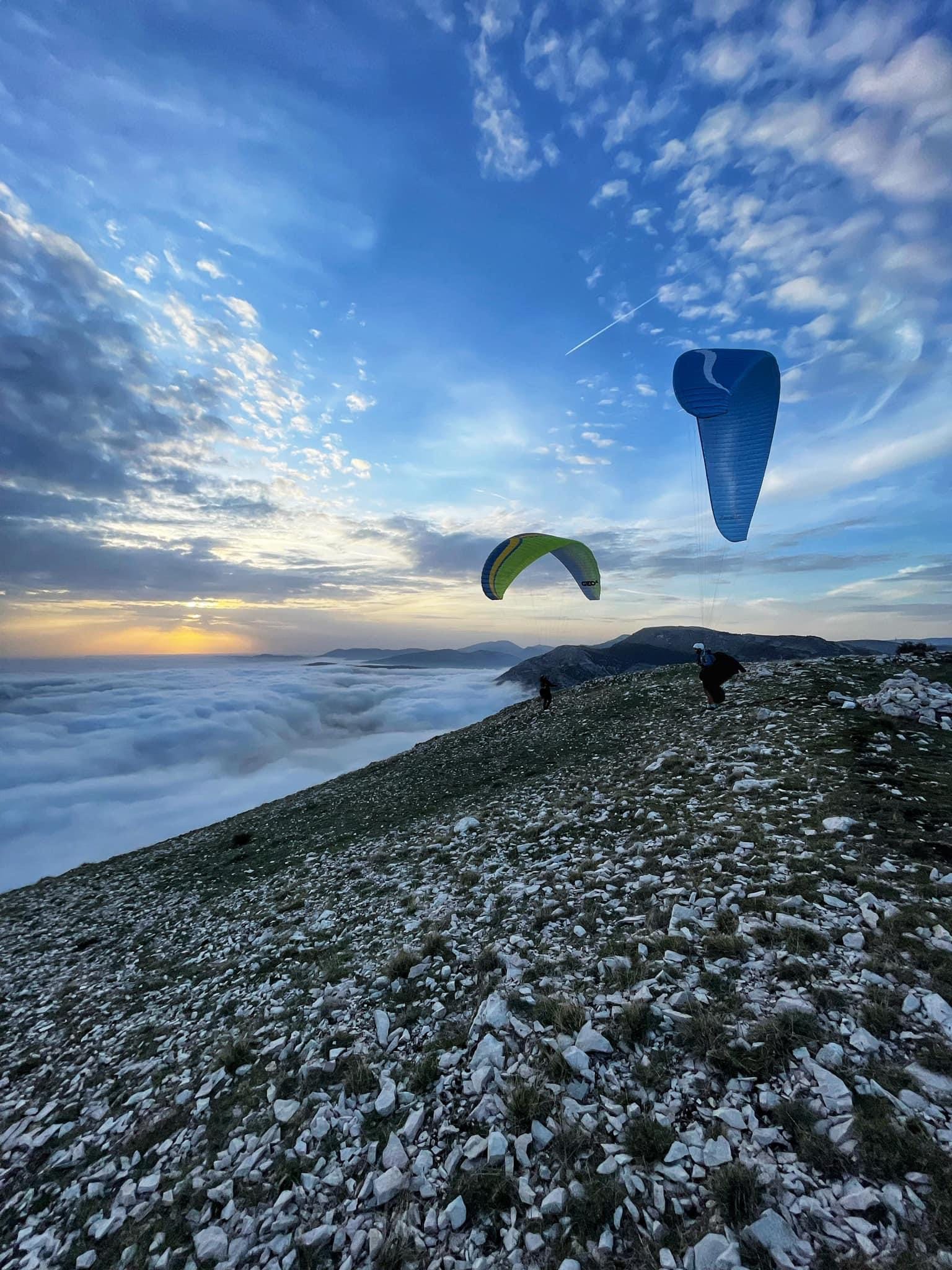
Two pilots inflating their wings, one yellow and green, the other blue, on a stony take-off above a sea of clouds Ground handling
  • ClassEN-A to start
  • Total flying weightYou + about 15 kg
  • SizeThe bottom of the range
  • First yearRenting the A1
  • New A1 wingFrom €1,990
  • New kitAround €3,500
The right time

When to buy your first paraglider wing?

Your first wing is bought after a year of flying, not while you are learning. On a paragliding course, the school provides all the flying gear; after that, you rent, while you find out how you like to fly.

On a course: the school's gear

Wing, harness, reserve parachute and helmet are provided: nothing to buy to learn to fly.

The first year: rent the A1

Aerotech, in Gréolières, rents out the school wing of our courses to our students and to all pilots.

After a year: buy

Your flying has taken shape: the wing is chosen to suit it, with an instructor's advice.

For that first year, Aerotech also offers a ready-to-fly pack built around the A1: wing, harness, reserve parachute and helmet. It can be rented without the helmet, with an option to buy; our shop page describes this beginner paragliding pack.

After a year, you know whether you enjoy flying along the ridges, your first distance flights or hike and fly. It is that way of flying that guides the choice of wing.

The class

An EN-A wing to start, then one class up

For a first wing, choose the EN-A class. The European standard EN 926-2 rates paraglider wings, also called gliders, from EN-A to EN-D, based on how they behave during test flights. An EN-A wing is the one that needs the least piloting to return to normal flight after a disturbance.

This is what is called passive safety. Under an EN-A wing, a brake input that is a little too strong or too late is forgiven. The wing also keeps good stability: your mind is free to work on positioning, piloting and feel.

EN-A: school and the first years

The most forgiving wings, the ones for beginners. They include school wings, such as the Aerotech A1 of our courses, and EN-A wings with more performance, such as the Ozone Alta GT.

EN-B: the progression wing

A wide class, from the progression wing to accessible distance flying. You move up to it when your level allows, with an instructor's advice.

EN-C and EN-D: for experienced pilots

They offer more performance, but call for active and precise piloting: they come well after your first wing.

Where to read a wing's certification

The class is shown on the wing's label and on the manufacturer's specification sheet, with the total flying weight range of each size.

When should you move up a class? There is no threshold to reach: the step is decided with an instructor who has seen you fly. Our Progression course is the right setting: you fly with an instructor, and you can talk it over with them.

Size

What wing size for your weight?

A wing's size is chosen from your total flying weight: your weight plus that of everything that flies with you. Each size has a total flying weight range certified by the EN rating, and yours must fall within it.

To work out yours, count the wing, the harness, the reserve parachute, the helmet, your clothes and any instruments you carry. For our students, we allow about 15 kg of gear.

To start out, aim for the bottom of the range. With less load, a wing flies a little slower and its reactions are gentler. At the top of the range, it becomes faster and livelier.

For the A1, Aerotech's manual gives total flying weight ranges of 55 to 90 kg in S, 70 to 110 kg in M and 90 to 125 kg in L. For beginners, it recommends a total flying weight of 55 to 70, 70 to 90 and 90 to 105 kg.

The table is in our guide to the paraglider glide ratio and a wing's specifications.

If you fall between two sizes, an instructor decides with you, based on your level and the sites you will fly. Each manufacturer gives its own ranges: for another model, read its specification sheet.

The type of wing

School wing, standard wing or lightweight wing?

A first EN-A wing can be a school wing, a standard wing or a lightweight wing. They differ in construction, weight and use, not in class.

The school wing is built for learning, repeated inflations on the training slope included. Aerotech describes the A1 as a school wing designed to last beyond school. The standard wing is for everyday flying from the take-offs, with no weight constraint.

The lightweight wing, with lighter fabric and lines, weighs less in the bag and packs smaller. It is the wing for hike and fly: walking up, then flying back down.

Our test of the Ozone Ultralite 5 shows what to expect from a hike-and-fly wing. A lightweight construction needs more care: avoid dragging it on the ground and pack it carefully.

The choice between a lightweight and a standard wing is made with an instructor, according to your flying plans.

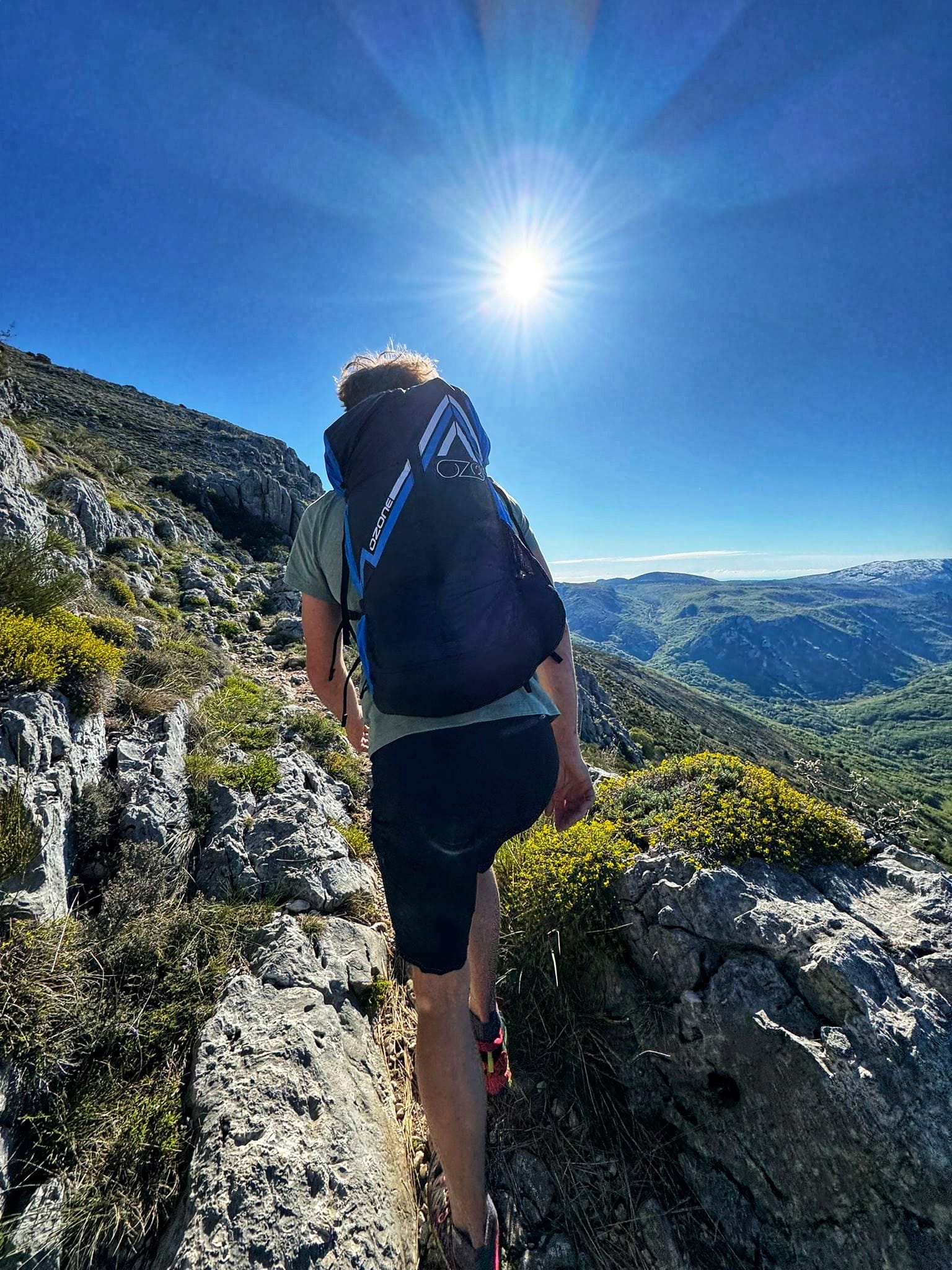
Pilot hiking up a rocky ridge path with an Ozone paraglider bag on his back, above a green valley
The test

Test your wing before buying it, in Gréolières

A wing is tested before it is bought. At Aerotech, in Gréolières, testing a wing is free, subject to availability: ask for it when you come for advice.

The first contact often happens on the ground. The Gréolières training slope is open to any pilot who wants to inflate their wing, while giving way to pilots coming in to land; our guide to paraglider ground handling explains what you work on there.

When inflating, you feel how the wing behaves: the way it rises, settles above your head and responds to the brakes. At Ailéments, that feel counts as much as the figures on the specification sheet.

The size is checked with an instructor. Aerotech is run by Pierre-Yves Alloix, a BEES instructor who also teaches on our courses, and Pierrot works there on the technical side: the advice comes from instructors who know our students and our sites.

New or second-hand? Our page on buying a paraglider compares new, second-hand and consignment sale. For a second-hand wing, the pre-purchase inspection is one of the services on our paraglider servicing page.

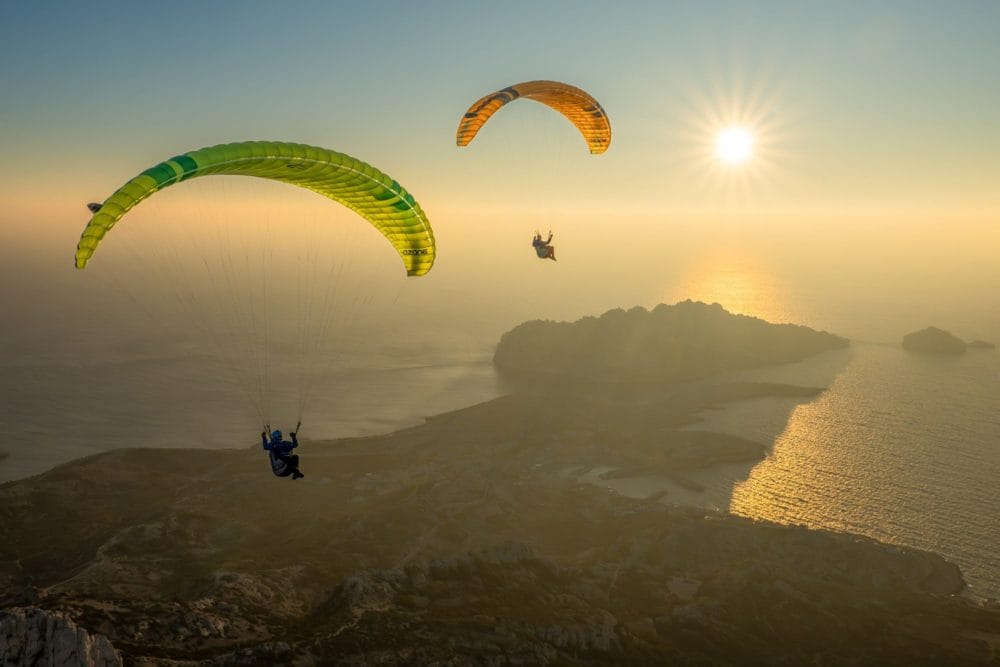
Helmeted pilot inflating a white, yellow and blue wing on top of a rocky hill, under a blue sky
Models

Three EN-A wings at Aerotech, with their price

Here are three EN-A certified paraglider wings sold by Aerotech, in Gréolières. The "from" prices were noted on 11 November 2026 on Aerotech's product pages, which show the current price.

Aerotech A1: the school wing of our courses

EN-A certified, it is the wing our students learn on, in sizes S, M and L. New, it starts at €1,990 on the Aerotech A1 product page, and it can be rented for the first year.

Ozone Moxie: Ozone's school wing

EN-A certified, it is intended for beginner and progression flying, according to its product page, and comes in six sizes, from XXS to XL. It starts at €2,720 on the Ozone Moxie product page.

Ozone Alta GT: a higher-performance EN-A

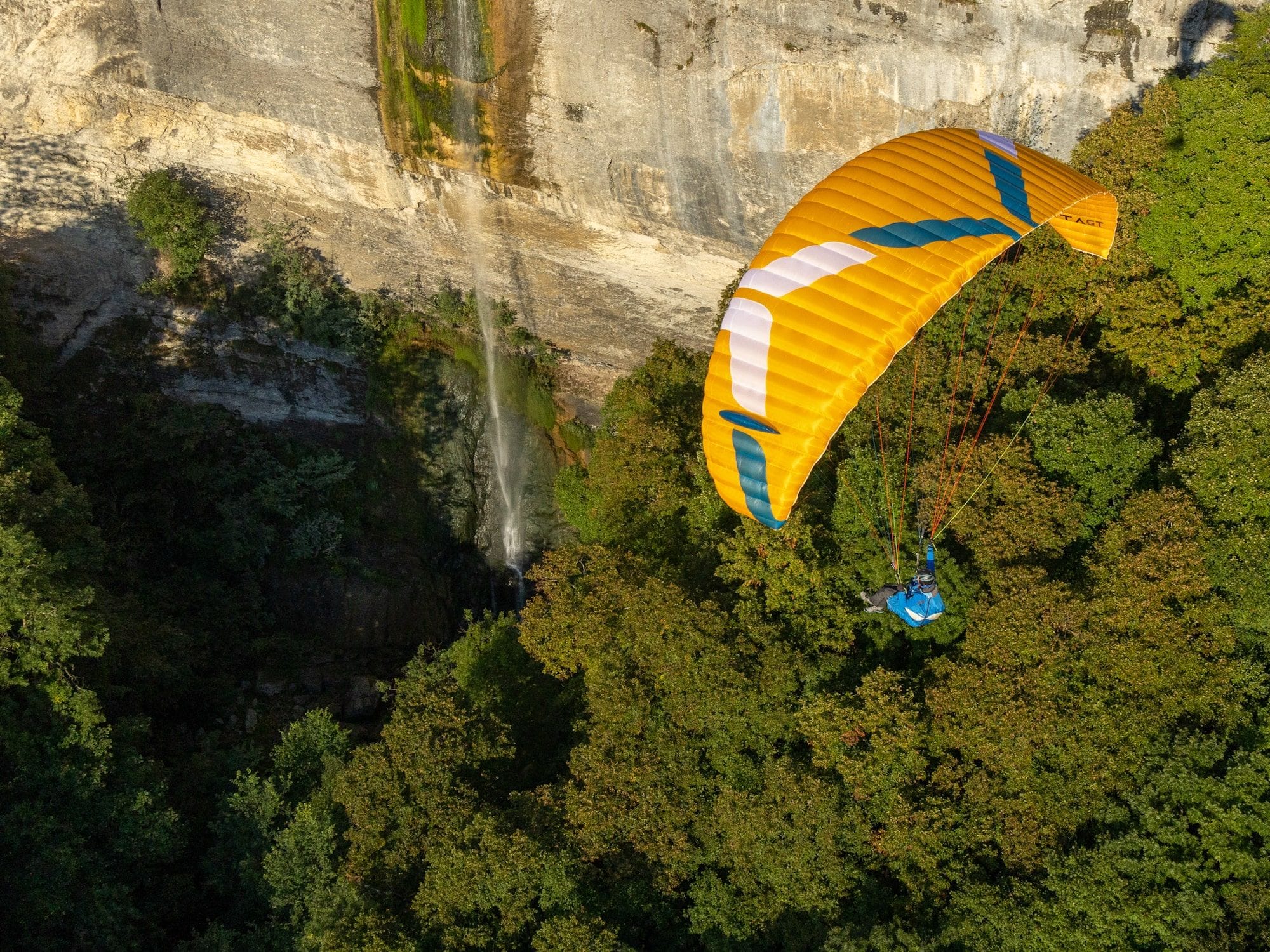
It sits between the advanced school wing and the entry-level EN-B. It starts at €3,070 on the Ozone Alta GT product page; our Ozone Alta test gives the view of our instructors, who have flown it in Gréolières.

The wing is only part of the budget: allow about €3,500 for a complete set of new gear.

This gear includes the wing, the paragliding harness, the reserve parachute and the helmet. Our page on the price of a paraglider lists each item with its price at Aerotech.

Like the Ozone wings, Air Design and Supair wings are available to order from Aerotech, with their harnesses. For another model, the method stays the same: class, total flying weight range, test and an instructor's advice.

Yellow, white and blue Ozone Alta GT wing flying above a forest, at the foot of a cliff and a waterfall
A good start

Four common mistakes when choosing your first wing

These mistakes can all be avoided before buying: advice, a test and a little patience are enough.

A size outside your range

Your total flying weight must fall within the certified range of the size, towards the bottom to start. Count everything: harness, reserve parachute, helmet and clothes.

Moving too fast to a more demanding wing

A higher-performance wing needs more piloting. Stay on EN-A until an instructor has advised you to move up a class.

Buying without testing

Two wings of the same class do not feel the same under the brakes. The test at Aerotech, free subject to availability, saves you from a wing that does not suit you.

A second-hand wing without a workshop check

A second-hand wing has a history you do not know. A workshop inspection before buying tells you what state it is in.

How we teach

A first wing to fly with peace of mind

At Ailéments, you progress while having fun, at your own pace, without comparing yourself to others. Your first wing is chosen in the same spirit: to fly relaxed and enjoy it, not to go fast.

No need to add an instrument: we work on feel first. A variometer is only recommended after a few years of flying, and it is never compulsory; Pierrot has flown without a vario for at least ten years.

Not a pilot yet?

Learn with the school's gear

Our Beginner course, 5 days for €700, uses the school's gear: the training slope first, then your first high flights if all goes well. Our guide to learning to paraglide covers the whole path.

To feel a wing in flight before you commit, book a tandem paragliding flight: your instructor can hand you the controls.

Book a flight
FAQ

Frequently asked questions about your first paraglider wing

Choice, size, class, lightweight wing, price, lifespan, certificate.

Which wing should you choose to start paragliding?

An EN-A certified wing, in the size where your total flying weight sits at the bottom of the range. For the first year, rent the Aerotech A1 used on our courses, then buy after a test in Gréolières and an instructor's advice.

What paraglider wing size for my weight?

First work out your total flying weight: your weight plus about 15 kg of gear. Then choose the size whose certified range includes it, towards the bottom to start. Between two sizes, ask an instructor, who takes your level and your flying sites into account.

EN-A or EN-B for your first wing?

EN-A. It is the class of the most forgiving wings, the one for school and the first years of flying. EN-B comes next, when your level allows: the step is decided with an instructor who has seen you fly, for example on a Progression course, with no number of flights to reach.

A lightweight wing or a mini wing to start?

A lightweight wing weighs less and packs smaller: it is mainly used for hike and fly. A mini wing, with a small surface area, flies faster and reacts more sharply. These are choices about how you fly: for a first wing, make them with an instructor and after a test.

How much does a beginner paraglider wing cost?

At Aerotech, a new EN-A wing starts at €1,990 for the Aerotech A1, €2,720 for the Ozone Moxie and €3,070 for the Ozone Alta GT: prices noted on 11 November 2026. Allow about €3,500 for a complete set of new gear. In the first year, renting saves you from buying too early.

How long should you keep your first wing?

As long as it suits you and is in good condition. Its wear is counted in flying hours, and a workshop service tells you where it stands. You change it when an instructor recommends moving up a class, or when the service calls for it; our guide to the lifespan of a paraglider covers maintenance.

Do you need a pilot certificate to fly your own wing?

No: in France, the only legal requirement to fly is to be insured. The FFVL Initial Pilot Certificate does attest to your autonomy on a known site in calm conditions, and our courses prepare you for it: the steps are on our paragliding pilot certificate page.