Technique · Gréolières training slope

Paragliding ground handling: mastering your wing on the ground, forward and reverse inflation

Ground handling means bringing your wing up above your head and keeping it there, with your feet on the ground: the basis of every take-off. At Ailéments, you learn it on the Gréolières training slope, in the breeze, during the first 3 mornings of the Beginner course (5 days, €700), with our state-qualified instructors.

  • Training slope at Gréolières
  • Forward, then reverse inflation
  • Aerotech A1 school wing
  • DEJEPS and BEES instructors
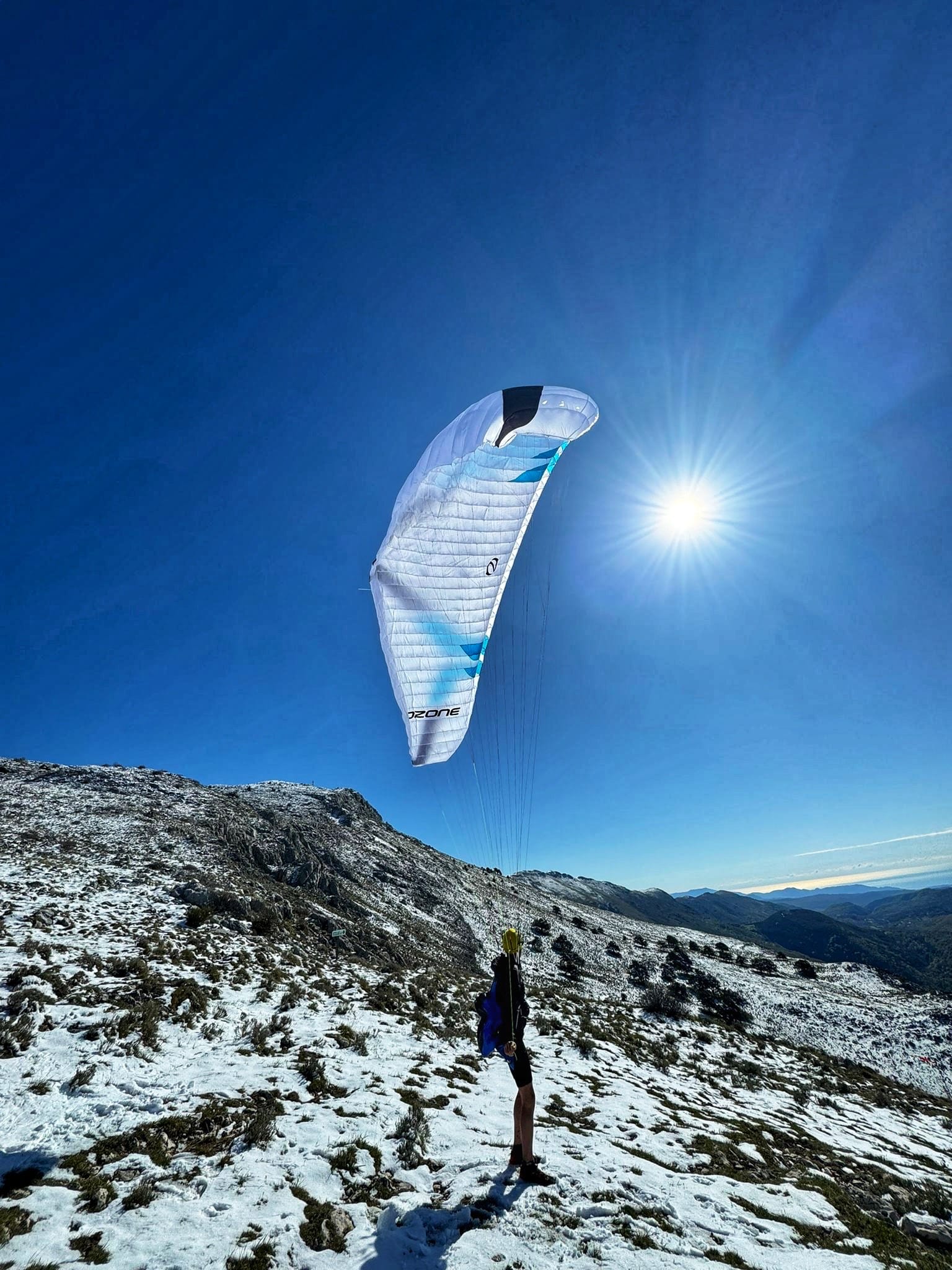
Paragliding ground handling on a snowy ridge: the white wing rises above the pilot, under a blue sky The wing above your head
  • WhereGréolières training slope
  • WhenIn the breeze
  • In this orderForward, then reverse inflation
  • On a courseBeginner course · 3 mornings on the training slope
  • EquipmentAerotech A1 school wing

Paragliding ground handling means flying your wing while keeping your feet on the ground: you bring it up above your head, stabilise it, move around under it, then put it back down. Every take-off starts with an inflation, and every pilot practises it, from the first days of a course to years of flying.

At the Ailéments paragliding school, ground handling is learnt on the Gréolières training slope, in the breeze, during the first three mornings of the paragliding Beginner course, with a video debriefing to understand what the wing is doing. You start with forward inflation; reverse inflation comes once forward inflation is well mastered.

This guide covers the two techniques, the right wind, beginners' mistakes, where to practise and with which wing, with advice from our instructors.

Paragliding ground handling: two pilots hold their wings above their heads, the first in a red jacket, brakes in hand
Feeling

What is ground handling for in paragliding?

Ground handling is for taking off safely and for feeling your wing: on the ground, without the risk of height, every movement of the wing in the risers and the brakes teaches you something.

Pierrot's advice

Feel what the wing is doing before acting on the brakes

« You have to try to feel as much as possible what the wing is doing, and you act according to that feeling, not the other way round. » Pierrot, DEJEPS instructor and founder of Ailéments.

Take-off

Every take-off starts with an inflation

A wing brought up cleanly and stable above your head means a controlled take-off. Ground handling is part of the practical skills validated at school for the certificate, along with take-off, piloting and landing: our paragliding training guide explains the path.

Feeling first

The school of feeling, before any instrument

At Ailéments, we work on feeling as much as possible. On the ground, ground handling sharpens it without the risk of height: paragliding safety starts with these sensations, long before instruments.

For everyone

Why certified pilots keep practising ground handling

Ground handling is not just for beginners. A certified pilot comes back to it to keep their reflexes, to prepare their take-offs when the breeze picks up, or to get to know a new wing.

Step by step

Forward, then reverse inflation: the two ground handling techniques

You first learn forward inflation, the technique for beginners; reverse inflation comes once forward inflation is well mastered. Here are the steps for each.

First steps

Forward inflation

With your back to the wing, facing down the slope, you hold the brakes and the A-risers.

  1. Prepare: the wing laid out in an arc, the lines untangled, the leading edge open to the wind.
  2. Inflate: a few determined steps forward, your arms follow the A-risers and the wing rises.
  3. Check the surge: when the wing arrives above your head, let go of the A-risers and brake just enough so that it does not overtake you.
  4. Control: a look up at the wing, then move back under it if it drifts to one side.
  5. Take off or bring it down: run to take off, or brake firmly to put it back on the ground.
Once forward inflation is mastered

Reverse inflation

Facing the wing, you watch it rise and hold it with your body weight.

  1. Turn around: facing the wing, one set of risers passed over your head; the brakes are crossed.
  2. Always turn the same way: you choose your direction of rotation once and for all, so you never take off twisted.
  3. Bring the wing up: pull the A-risers gently, stepping back if needed.
  4. Stabilise it: the brakes are reversed, the right brake acts on the part of the wing you see on your left.
  5. Turn back the right way: then run to take off, or bring the wing down with the brakes.

Once in the air, the work on the brakes goes on: our paragliding piloting guide takes over.

The wind

What wind for ground handling?

Ground handling is practised in the breeze: on the Gréolières training slope, the breeze system gives a steady wind, head-on, to bring the wing up and hold it above you.

No magic number

A steady breeze, suited to your level

Rather than a set wind speed, the instructor chooses the moment according to your level, your wing and your weight, and you learn to read the wind at the same time as the wing. Our flying conditions guide explains how to judge it.

No wind, strong wind

Ground handling with no wind and in strong wind

With no wind, the wing inflates as you run, in forward inflation, which takes more momentum. When the breeze picks up, the wing pulls harder: while learning, you stop rather than get dragged. Reverse inflation, learnt later, helps to hold that pull.

On the training slope

Beginners' ground handling mistakes, and how to correct them

The most common ground handling mistake is a coordination mistake: you act on the wing before feeling what it is doing.

The gesture

Mistake no. 1: acting on the wing before feeling it

Beginners pull, brake or run by reflex. The fix: first feel what the wing is doing in the risers and the brakes, then act according to that feeling.

Repetition

Repeating the re-centring and the coordinated moves

Moving back under the wing when it drifts to one side, acting on the brakes at the right moment and with the right amount: these moves are repeated until body memory sets in and your senses wake up, little by little.

State of mind

Progressing through play, without pressure

Ground handling is a game: everyone moves forward at their own pace, without comparing themselves to other students. On the Beginner course, the video debriefing helps you see what you felt.

Practise

Where can you practise paragliding ground handling?

On a training slope, supervised at first. At Gréolières, the training slope is open to all pilots, who practise there while respecting the pilots in the air coming in to land.

Gréolières

The training slope, in the breeze

This is where our students do their first inflations, during the first three mornings of the Beginner course. After the course, you can come back to practise, giving way to pilots arriving at the landing field.

On your own?

On your own, once the basics are learnt

Your first inflations are done with an instructor, who chooses the moment, corrects your moves and teaches you to feel the wing. On your own, you practise once the basics are learnt, on open ground and in a breeze suited to your level.

Dune du Pilat

The sand of the dune, another playground for ground handling

After the Beginner course, with your own wing, our Dune du Pilat paragliding course, with the Waggas School, helps everyone progress at their level, from reverse inflation to waggas.

See the Dune du Pilat course
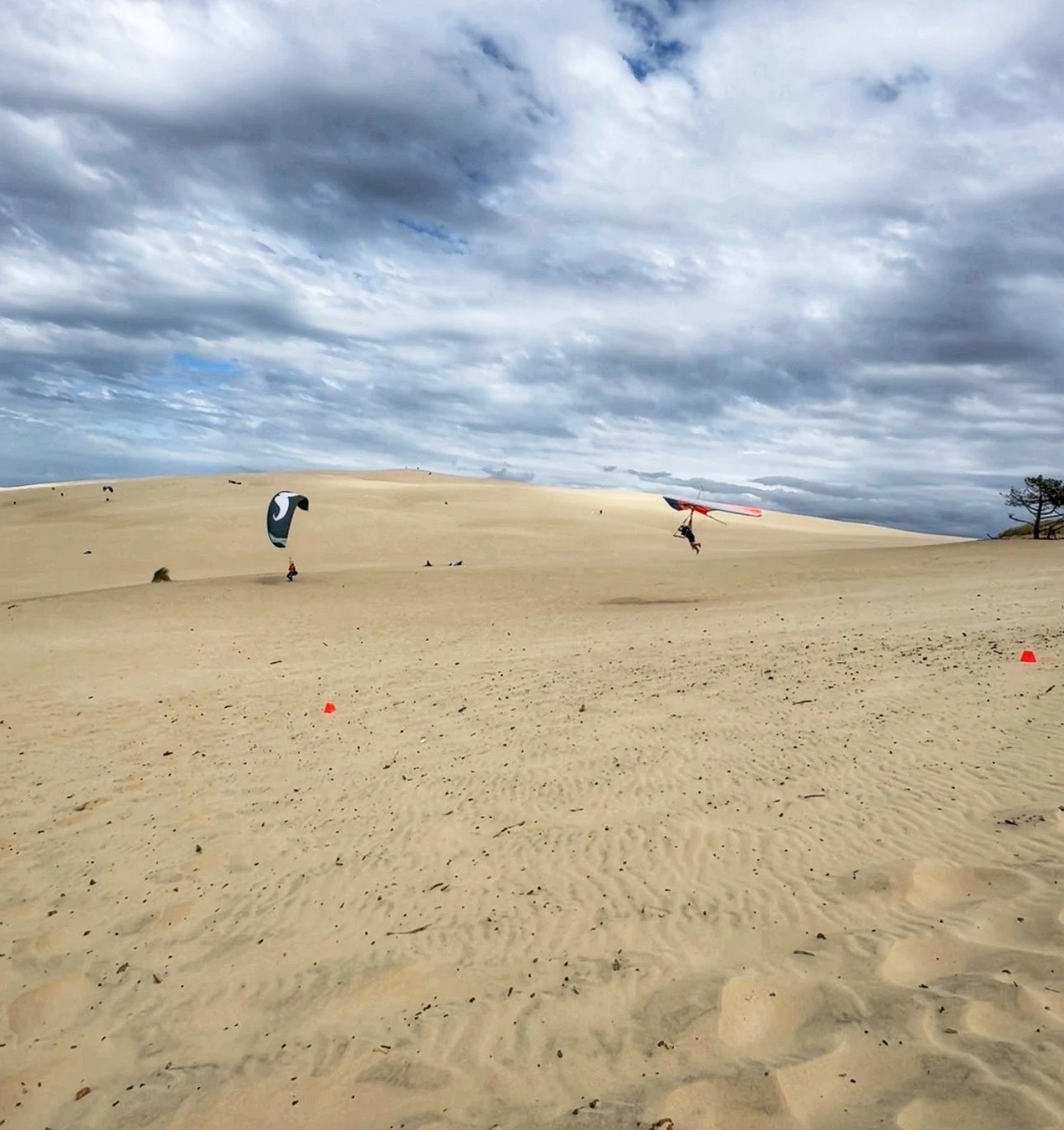
Inflating a paraglider on the sand of the Dune du Pilat, training cones on the ground
Equipment

Which wing to practise ground handling with?

With equipment suited to the student: the all-up weight (your weight with all your equipment) and your level as a pilot decide the wing. For learning, the Aerotech A1 school wing is a good tool.

On a course

The equipment is provided

During the courses, the school provides the equipment, suited to your weight and level: the Aerotech A1 school wing, the harness, the helmet, the radio and the reserve parachute. No personal equipment is needed to start.

After the courses

Rent before buying, and take care of your wing

To practise between two courses, we recommend renting from Aerotech, in Gréolières, before buying your own wing after a year of flying. Ground handling wears the fabric, especially on stony ground or in sand: see our guide to the lifespan of a paraglider.

With Ailéments

Learning ground handling on a course with Ailéments

Ground handling is learnt on a course, with a state-qualified instructor: it opens the Beginner course, then progress continues, course after course.

Beginner course · 5 days · €700

The Beginner course starts on the training slope

Welcome on the first day, the training slope on the first three mornings with video debriefing, theory in the afternoon, then, if all goes well, the first high flights on the last two days. From 14 years old, equipment provided.

Next

After the Beginner course: Progression course and Dune du Pilat

The paragliding Progression courses continue the path towards autonomy, and the Dune du Pilat, with your own wing, offers whole days on the ground and skimming the sand.

All our courses are on our paragliding course page. Depending on where you come from, see our paragliding school near Nice, our paragliding school for the Var or our paragliding school in the PACA region.

On video

A wing inflated above the sand of the Dune du Pilat

Holding your wing above you, feeling it, playing with it: a few images filmed by Ailéments at the Dune du Pilat.

Frequently asked questions

Frequently asked questions about paragliding ground handling

Wind, equipment, place, course: the questions people ask before working on their ground handling.

What wind for paragliding ground handling?

A steady breeze, head-on. On the Gréolières training slope, ground handling is practised in the breeze system; the instructor chooses the moment according to your level, your wing and your weight, rather than a fixed number. When the breeze gets too strong for your level, you stop.

Can you practise ground handling with no wind?

Yes, with forward inflation: with no wind, it is your run that brings the wing up. It takes more momentum and good control of the surge when the wing arrives above your head. Reverse inflation, on the other hand, is practised in the breeze.

How do you practise ground handling in strong wind?

While learning, you do not inflate in strong wind: the wing pulls and can drag you. Reverse inflation, learnt once forward inflation is mastered, then helps you hold the pull with your body weight. The right reflex is still to give up when the breeze is beyond your level.

Where can you practise paragliding ground handling?

On a training slope, supervised at first. At Gréolières, the training slope is open to all pilots, while respecting the pilots in the air coming in to land. With your own wing, after the Beginner course, the Dune du Pilat is another training ground, with our course and the Waggas School.

Do you need a ground handling wing to practise?

Not necessarily: what matters is equipment suited to your all-up weight and your level. On a course, the Aerotech A1 school wing is used to learn ground handling; afterwards, renting from Aerotech lets you carry on before buying your own wing.

Can you learn ground handling on your own?

Your first inflations are done with an instructor, who chooses the moment, corrects your moves and teaches you to feel the wing. On your own, you practise once the basics are learnt, on open ground and in a breeze suited to your level.

Is there a paragliding ground handling course?

Ground handling is part of the Beginner course: at Gréolières, the first three mornings are spent on the training slope, with a video debriefing. With your own wing, the Dune du Pilat course also helps you progress on the ground, from reverse inflation to waggas.

How long does it take to master ground handling?

There is no typical length of time: everyone progresses at their own pace. The moves are repeated until body memory sets in and the sensations come, little by little. Even certified pilots keep practising ground handling to keep their reflexes.

Written by Pierre-Yves Fenet, DEJEPS paragliding instructor

Founder of Ailéments in 2013, more than 20 years of experience in free flight. On the Gréolières training slope, he teaches his students to feel the wing before acting.

The essentials

The essentials of paragliding ground handling

What to remember before bringing your wing up for the first time.

1

The basis of every take-off

Bringing your wing up, stabilising it above you and controlling it on the ground: every take-off starts there.

2

Forward inflation first, reverse inflation next

You learn forward inflation; reverse inflation comes once forward inflation is well mastered.

3

In the breeze, supervised at first

On the Gréolières training slope, in the breeze system, with an instructor, then on your own once the basics are learnt.

4

Feel the wing before acting on the brakes

Feel what the wing is doing, then act: repetition builds body memory, little by little.