Canyon · Risks

Is canyoning dangerous? The real risks, explained by an instructor

Yes, canyoning carries real risks. In the Alpes-Maritimes, in 2013-2014, 8 rescues out of 10 came from a jump, a slide or a fall while walking. With us, a state-qualified instructor checks the weather and the water flow, you only jump if you want to, and being able to swim is compulsory.

Canyoning: abseiling beside a waterfall, with two participants in the water below
  • No. 1 causeJump or slide
  • DrowningRare, but serious
  • Storm or floodFree rescheduling
  • Group8 people at most
  • SupervisionState-qualified
  • SwimmingCompulsory
In brief

Is canyoning dangerous? The straight answer

Yes, canyoning carries real risks: you are moving through a natural environment that has not been made safe. Proper supervision limits them without removing them. Four matter most:

  • A jump or a slide
  • A fall while walking in the river
  • Storms and rising water
  • Drowning, rare but serious
Alpes-Maritimes figures

What are the dangers of canyoning?

The main dangers of canyoning are jumps and falls while walking: 80% of the reasons for rescue in a study of 65 call-outs by the Alpes-Maritimes fire and rescue service (SDIS 06), from April 2013 to August 2014.

Reasons for canyon rescues in the Alpes-Maritimes, 2013-2014
ReasonShare of rescuesKey point
Jump or slide45%Leg and ankle: the most serious injuries
Fall while walking35%Often milder: usually a sprained ankle
Unable to continue6%Group stranded by nightfall or water flow
Drowning3%Rare, but serious
Rope incident3%–
Other reasons8%Approach or return walk, feeling unwell, falling rock

Rescue remains difficult at the bottom of a canyon, and the study's author concludes that the risk of death cannot be ignored. These figures have limits: they date from 2013-2014, exclude victims who got out on their own and do not separate guided outings from the others. Source: dissertation by B. Guyot, French inter-university diploma in mountain emergency medicine, 2014.

Across France, a 2010 ministerial reply to a parliamentary question gives a similar picture: 42% of accidents linked to jumps, 13% to rope errors. According to a working group, rescuers included, this accident record was not excessive compared with other outdoor sports.

Supervision

How we limit these risks

We do not remove these risks: we limit them at every stage.

Leading canyoning for pay requires a diploma (article L. 212-1 of the French Sports Code). The safety skills of the DEJEPS canyoning diploma, the French state qualification our founder has held since 2014, are re-checked every six years.

An instructor carrying ropes and a group in helmets among large boulders, on the way down a canyon

Jumps and slides

Your instructor explains the jumping position and how to slide, then goes first to show you. Jumps remain optional.

Falls in the canyon

A safety briefing opens every outing. You wear an approved helmet and closed shoes.

Rope and equipment

Anchors checked, abseil secured by your instructor, equipment inspected before every outing and serviced every year.

Group size

Our quality charter sets a maximum of 8 people per instructor, in line with departmental regulations.

Storms and floods: before your outing

  1. When you book

    The canyon is decided when you book, according to the weather.

  2. Every day

    Weather check. The water flow is checked before every outing.

  3. The day before your canyon

    Confirmation by text message or by phone.

  4. Storm or flood

    Another date, free of charge.

Swimming

Do you need to be able to swim to go canyoning?

Yes, being able to swim is compulsory to go canyoning with us, and you must be willing to put your head under water. No swimming certificate is required.

Some sections are swum, in deep pools. Drowning is rare, but it was the leading cause of death in canyons across France between 2000 and 2008. The French mountain and climbing federation (FFME) also requires you to be able to swim and go under water, from its first canyoning skills passport onwards.

Are you a weak swimmer, or afraid of water? If you are not at ease in the water, canyoning is not for you. If in doubt, talk to us before booking, via our contact page.

Group swimming in a turquoise pool at the foot of a waterfall, canyoning in the Gorges du Loup
Fear

Is canyoning scary?

Yes, canyoning can be scary: according to Pierrot, our instructor, beginners are most afraid of the jumps, especially if they have a fear of heights.

You decide on every jump. Abseils can be avoided at the Gours du Ray and in the Gorges du Loup, but not everywhere: at Cramassouri, the route ends with a 10-metre abseil.

What happens on a first outing is explained on our beginner canyoning page.

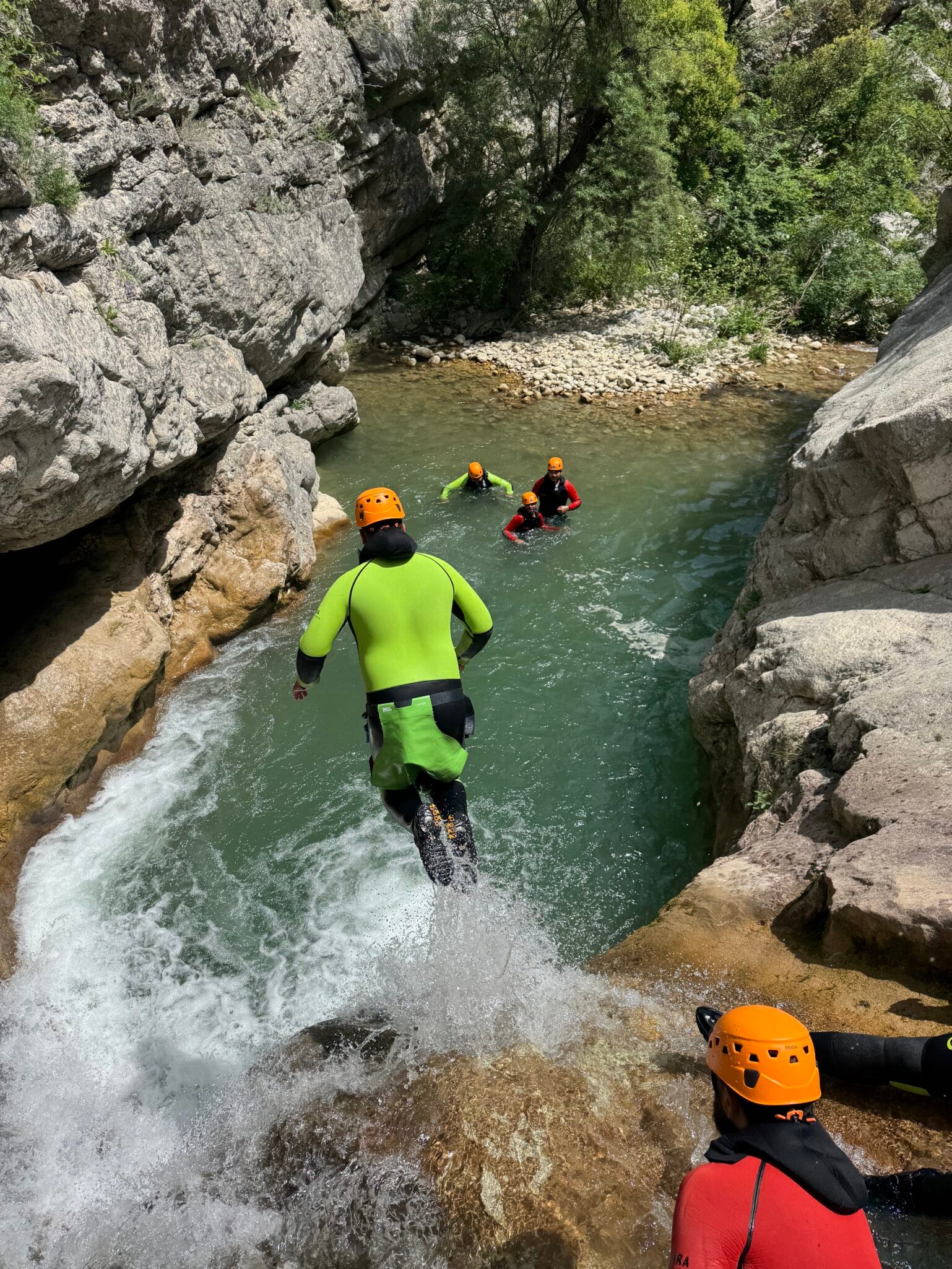
A jump into a pool in the Gours du Ray: a person in a helmet leaps as three others wait in the water
Contraindications

Who should not go down a canyon?

Canyoning is contraindicated in case of heart problems, epilepsy or pregnancy.

Tell the instructor in advance about any other medical constraint: asthma, diabetes, injury, old fracture. Depending on the route, we take into account your level, height, weight and age. If in doubt, ask your doctor for advice.

The half-day is open from age 8, the full day from 16 to 70; for your children, see our family canyoning page.

To begin with

Which canyon should you start with if you are worried?

We recommend the Gours du Ray: the Alpes-Maritimes Department rates it “not very difficult”, its jumps are optional and its 4-metre abseil can be avoided.

We most often go to the Gorges du Loup: see our canyoning in the Gorges du Loup page. Driving times from Nice are on our canyoning in Nice page, and all our routes on the canyoning in the Alpes-Maritimes page.

Book my outing
FAQ

Frequently asked questions about the risks of canyoning

Is canyoning dangerous?

Yes, canyoning carries real risks: injuries from jumps, slips, floods, drowning. A state-qualified instructor, checks on the weather and the water flow, and optional jumps limit them without removing them.

What are the dangers of canyoning?

In the Alpes-Maritimes, in 2013-2014, rescues mostly involved jumps or slides (45%) and falls while walking (35%), then groups stranded by nightfall or water flow (6%).

Is canyoning dangerous if I am a weak swimmer?

Yes: you will swim in deep pools, and you must be willing to put your head under water. If you are not at ease in the water, canyoning is not for you. If in doubt, talk to us before booking.

Can you go canyoning if you cannot swim?

No, not with us: being able to swim is compulsory, because some sections are swum. No swimming certificate is required.

Have there been deaths linked to canyoning?

Yes, there have been deaths, mainly by drowning: across France, 7 deaths out of 13 were due to drowning between 2000 and 2008, according to a 2010 ministerial reply. We have not found more recent national figures.

Is canyoning scary?

Yes, especially the jumps, in particular if you have a fear of heights. You decide on every jump. Abseils can be avoided at the Gours du Ray and in the Gorges du Loup, but not everywhere.

What happens if there is a storm?

If there is a storm or a risk of flooding, we offer you another date, free of charge. We confirm every outing the day before, by text message or by phone.

Can you go canyoning during pregnancy?

No. Our terms and conditions of sale state that canyoning is contraindicated for pregnant women, with no distinction for early pregnancy.

In summary

The essentials on the dangers of canyoning

  1. 1

    Real risks, especially with jumps

    Jumps, slides and falls: 8 rescues out of 10 in the Alpes-Maritimes in 2013-2014.

  2. 2

    Being able to swim is compulsory

    If you are not at ease in the water, it is not for you.

  3. 3

    Start with the Gours du Ray

    Optional jumps, avoidable abseil, free rescheduling if there is a storm.