Fear of heights

Paragliding and vertigo: can you fly with a fear of heights?

Yes, most of the time: seated under the wing, with no edge or balcony beneath your feet, you do not feel the drop as you do at the edge of a cliff. If your head spins in everyday life, ask your doctor first. Tandem flight at Gréolières, with a State-qualified instructor, from €140.

  • You never jump
  • We never force you
  • Tailor-made flight
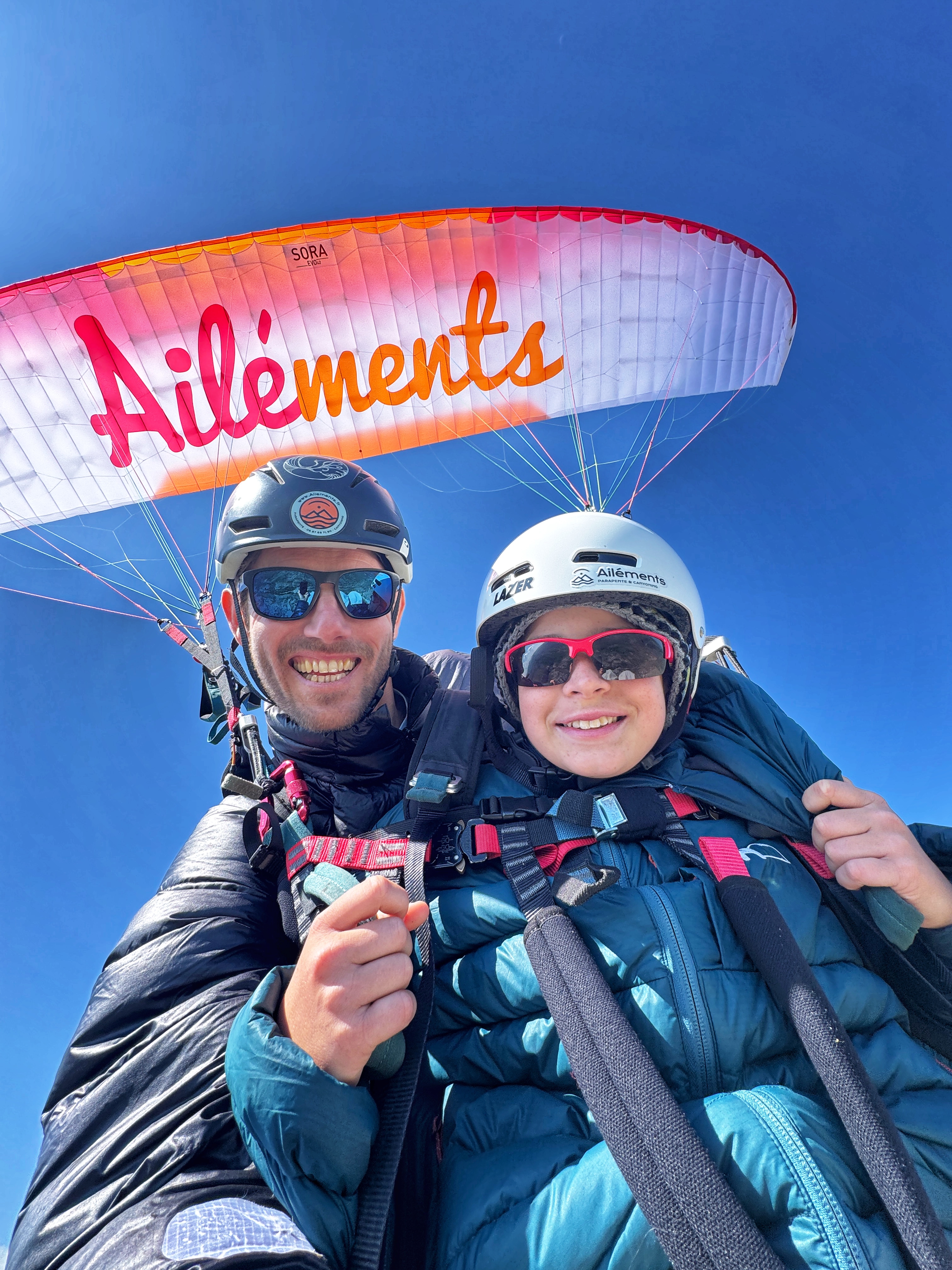
Smiling passenger and instructor on a tandem flight, in helmets and sunglasses, a rocky ridge below them Seated under the wing
  • Fear of heightsDoes not stop you flying
  • True vertigoYour doctor's advice
  • Take-offA few steps, no jump
  • In the airSeated in the harness
  • Air sicknessAscending flight first
  • If it doesn't feel rightWe never force you
In brief

Vertigo, jumping, nausea: your fears, one by one

  • Fear of heights: it does not stop you flying. Most of the time, you do not feel it in the air as you do on a balcony.
  • Fear of jumping: you never jump. You take a few steps with your instructor, and the wing lifts you.
  • Fear of freezing up: we never force you, and every flight adapts to how you feel.
  • Air sickness: if you are prone to it, start with an Ascending flight and talk to your instructor.
  • True vertigo: if your head spins in everyday life, ask your doctor first.
In the air

Do you get vertigo when paragliding?

Most of the time, no: it is not the balcony feeling.

On a balcony, a ladder or at the edge of a cliff, your eyes go from the point of support to the drop: that contact is what triggers the unease. Under the wing, that nearby point of support disappears. You are suspended, seated in the harness, and the sensation changes.

Many passengers who called themselves “terrified of heights” fly without discomfort on their very first flight. We do not promise “never”: everyone reacts in their own way, and your instructor talks it through with you.

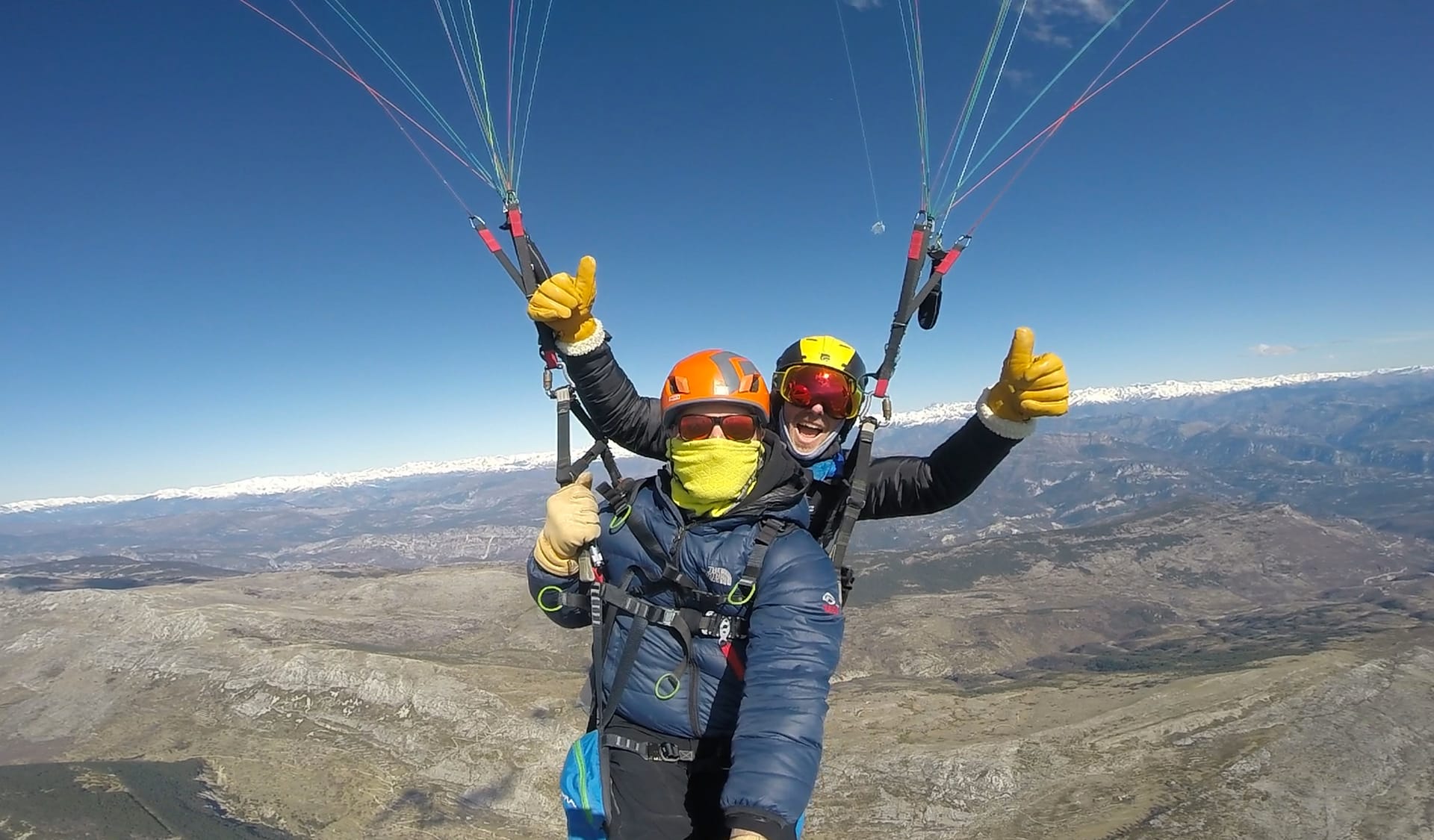
Instructor and passenger on a tandem paragliding flight, seated in the harness, above a snow-covered ridge
Telling them apart

Vertigo or fear of heights: they are not the same thing

Fear of heights: you can fly

Nervousness about height, on a balcony, a ladder or at the top of a cliff. Just talk to your instructor about it.

True vertigo: your doctor's advice

Your head spinning or your balance giving way, with nothing to do with height. Ask your doctor before booking.

The French health insurance service, Assurance Maladie, reminds us that you should see a doctor after any vertigo or faintness accompanied by a loss of balance or a hearing problem, even a brief one. For other health situations, see our paragliding contraindications page.

Taking off

Is paragliding scary?

A little nervousness is normal, and we take care of it before take-off.

We build your confidence from the shuttle ride up, about 20 minutes by 4×4. Those accompanying you stay at the landing field: nobody goes up to the take-off to watch.

After that, everything moves quickly. “We do not leave them time to overthink: that is the secret,” says Pierrot. You go with your instructor's movement for a few steps, as if you were dancing together, and the wing lifts you: you do not jump.

Every step is on our how a tandem paragliding flight works page.

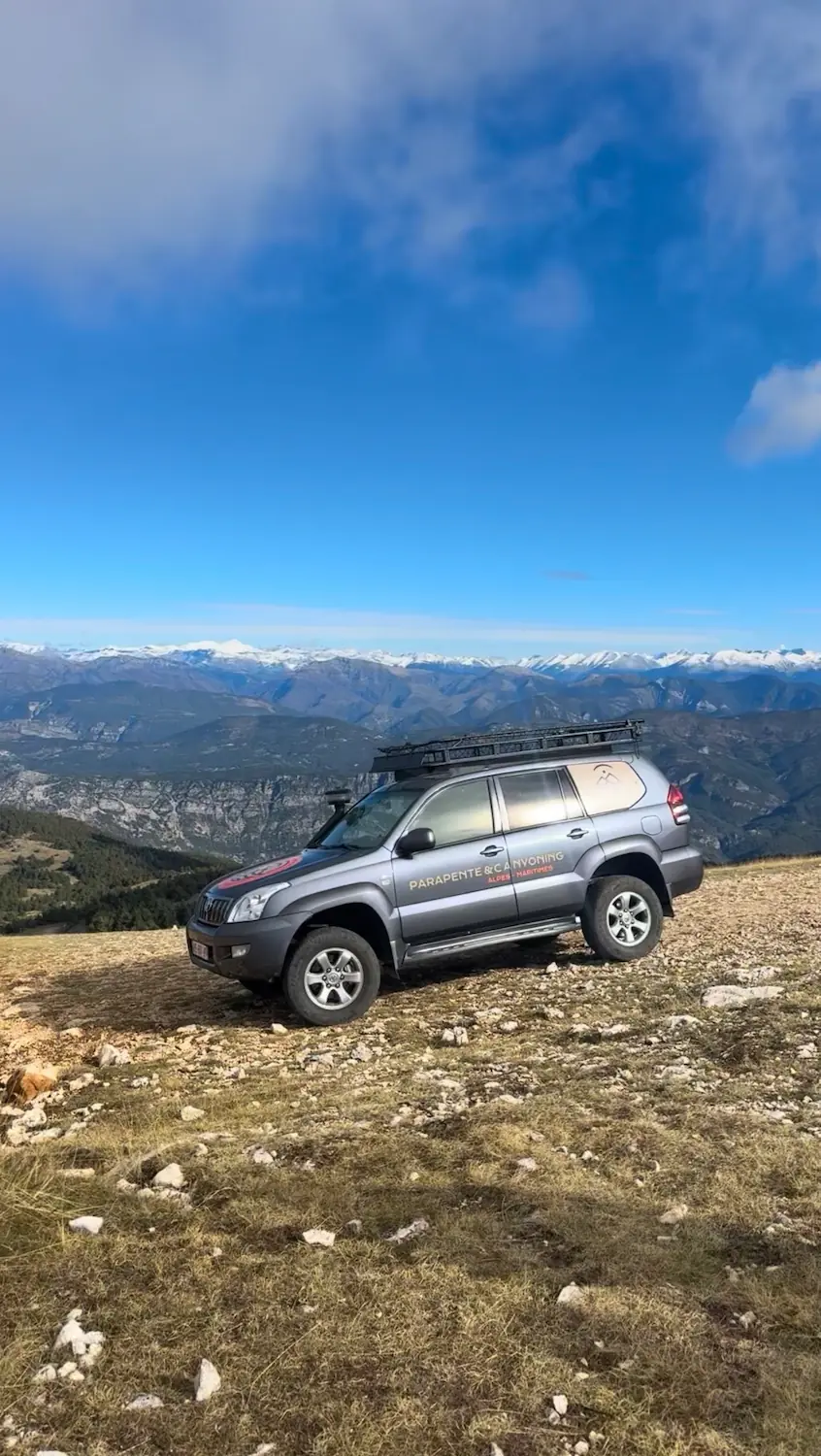
The Ailéments 4x4 on the take-off area, snow-capped peaks on the horizon

How high do you fly?

It depends on the conditions and the take-off chosen, at 1,100, 1,500 or 1,800 m at Gréolières. We never go above 2,000 m.

Who do you fly with?

A State-qualified instructor, DEJEPS or BEES, at a school with 10,000 flights without a serious accident. Everything is on our paragliding safety page.

Air sickness

Can you get air sickness when paragliding?

Air sickness, nausea: if you are prone to motion sickness or seasickness, you need to take it into account. Start with an Ascending flight: you can always come back for the Prestige flight.

The Prestige flight can wait

It is not recommended in cases of severe motion sickness: it lasts 45 minutes to 1 hour, and the spirals can be intense.

A flight at your own pace

Every flight is tailor-made. If you prefer to take in the view, your instructor flies very gently, and aerobatics only happen if you agree.

Any doubts before booking? Ask us via the contact page.

Your first flight

Which flight should you choose if you are worried?

Which flight to choose if you are nervous about the drop or air sickness
FlightDurationFor whomPrice
Ascending flight20 to 30 minutesFrom age 7, our advice to start with€140
Child flight10 to 15 minutesAges 5 and 6, in the morning, when the air is calm€100
Prestige flight45 minutes to 1 hourFrom age 12, one to save for later if you are worried about air sickness€250

The Child flight is reserved for ages 5 and 6: for an adult, the first flight remains the Ascending flight. With the youngest too, we never force them: everything is on our paragliding for kids page.

And then

Now choose your flight

To find out everything before booking, see our tandem paragliding flight page. All our flights are on the paragliding page, and the prices on the paragliding flight prices page.

Book my flight
On video

Our passengers on video, and their reviews

A glimpse of the atmosphere at the Gréolières take-off, with passengers kitted out.

To read what those who have flown with us say, see our customers' feedback: more than 1291 5-star reviews.

FAQ

Frequently asked questions about paragliding and vertigo

Vertigo, fear of heights, jumping, air sickness, fear in flight, take-off.

Can you paraglide if you have vertigo?

Yes, if it is the fear of heights you feel on a balcony or a ladder: it does not stop you flying. If your head spins in everyday life, ask your doctor first.

Why don't you get vertigo when paragliding?

The unease comes mainly from the visual contact between a nearby point of support and the drop. In flight, that point of support no longer exists: you are suspended under the wing.

Is a paragliding jump scary?

People often talk about a jump, but there isn't one: a few steps with your instructor, and the wing lifts you. A little nervousness at take-off is still normal.

How can you avoid being scared when paragliding?

Talk to your instructor about it. They build your confidence from the shuttle ride up, and they adapt the flight to how you feel.

Can you get air sickness when paragliding?

If you are prone to motion sickness or seasickness, you need to take it into account: start with an Ascending flight. The Prestige flight is not recommended in cases of severe motion sickness.

What if I get scared during the flight?

Tell your instructor: they fly according to how you feel, very gently if you prefer. Aerobatics only happen if you agree.

What if it doesn't feel right just before take-off?

We never force you. Tell your instructor before you set off.

In summary

The key points if you are afraid of heights

3 points to remember before booking.

  1. 1

    A fear of heights does not stop you flying

    You do not jump, and nobody is forced.

  2. 2

    Air sickness: the Ascending flight first

    If you are prone to motion sickness, save the Prestige flight for later.

  3. 3

    True vertigo: your doctor's advice

    If your head spins in everyday life, ask them before booking.