Legal · Paragliding

Paragliding regulations Airspace, equipment and the case of Gréolières

What the law really says about flying is this: paragliding is a free activity, but not without limits. Airspace, the ceiling of the Nice TMA at 1 Gréolières,000 meters, altitudes of flight, equipment and license — the clear guide to paragliding regulations, by our DEJEPS instructors, Gréolières since 2013.

  • Airspace E/F/G
  • TMA Nice: ceiling at Gréolières
  • Approved & revised equipment
  • License & insurance
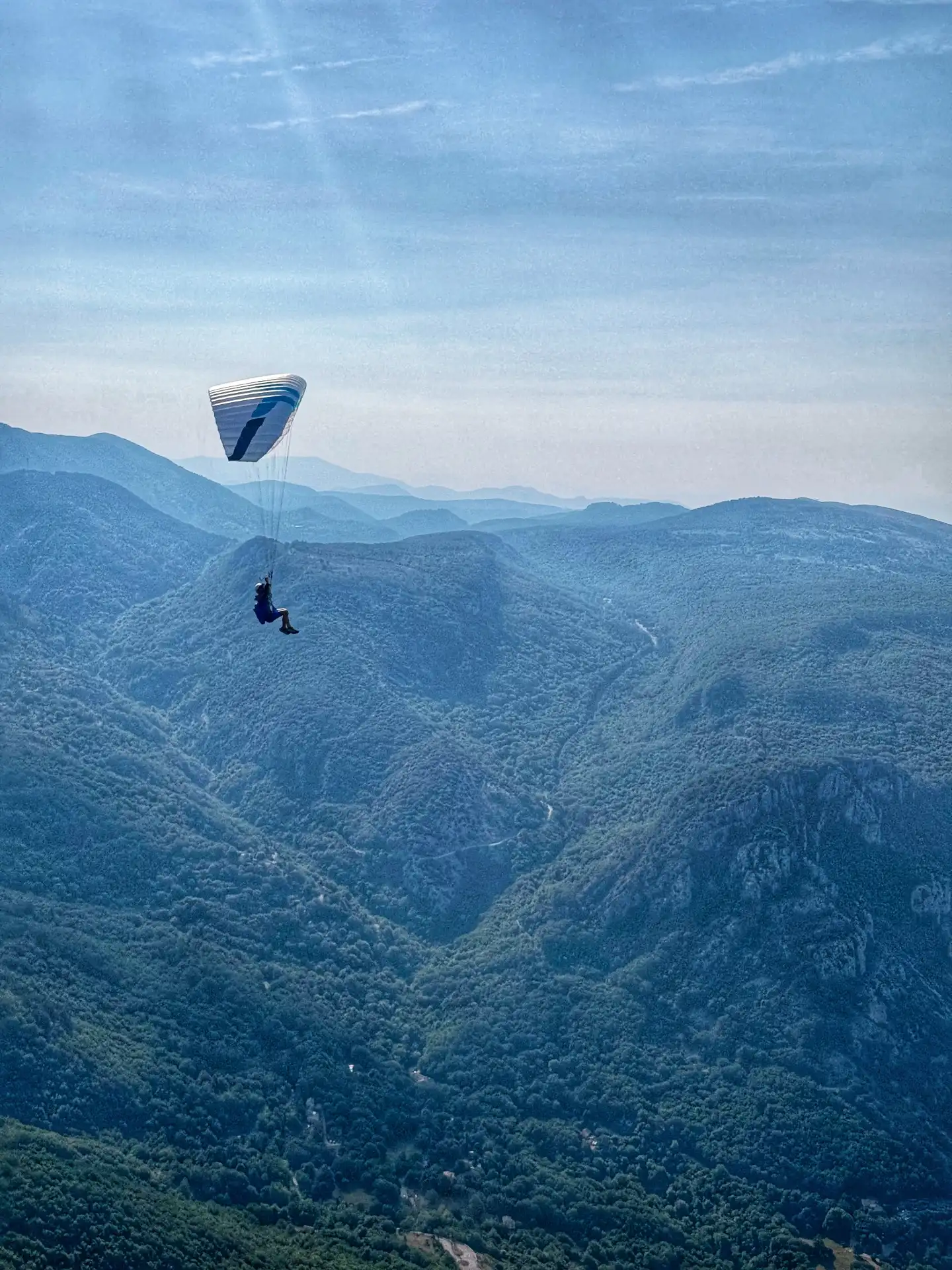
Parapentist flying solo at altitude above a wooded valley in the Alpes-Maritimes Flying within the rules
  • StatuteParapente = PUL
  • AirspaceClasses E, F, G
  • GréolièresTMA Nice ceiling ≈ 1,990 m
  • Overflight150 m ground · 300 m cities
  • In practiceLicense & safe equipment

Paragliding has this rare characteristic: it is an aerial activity that is very little regulated by law. One can legally fly without a license, without a permit, and without insurance. But «little law» does not mean «no rules»: the airspace, on the other hand, is strict, and common sense does the rest.

This guide to parapent regulations sorts out what the law really mandates and what is part of responsible practice:'airspace and its ceilings, the very concrete case of Gréolières under the TMA of Nice, the altitudes of flight, and the equipment. Clear, without jargon.

It is written by the Ailéments team, school paragliding at Gréolières (06) since 2013. Our state-certified instructors (DEJEPS) fly every day under the TMA in Nice: the regulations are not recited; we experience them in real life.

Cheiron peak above Gréolières, a flight site in the Alpes-Maritimes
The framework

What the law says (and does not say)

It is often a surprise: in France, paragliding is a free activity. The law requires very little of it — but the practice requires much more.

On the legal side

A free pastime

No legal obligation Patent, license, medical certificate or insurance To fly, neither homologation nor registration of the wing is required. The paraglider is classified as PUL (ultra-light glider), a category of very light aircraft.

On the practical side

What is really required

The schools impose licence and medical certificate for internships; many sites require the FFVL license (which includes a insurance civil liability); and to steal without protection or insurance would be unreasonable. One steals freely, not unconsciously.

The spirit

The pilot's responsibility

The legislator trusts the pilot: it is up to him to be trained, insured, and to fly within his limits. That is why the patent and a real one culture of security They count for much more than just a ticked box.

The sky is divided

Airspace: Where and to what extent to fly

This is where the regulations become precise. The sky is divided into areas, and the paraglider has access only to some of them.

The classes

E, F, G and FFVL zones

Paragliding flies in the airspace of Classes E, F and G, and in areas with the Vol Libre FFVL protocol. It is prohibited in controlled airspace (TMA, CTR around airports) and in P, R or D zones (forbidden, regulated, dangerous).

The heights

Rules of flight

150 m minimum above the ground, water or an isolated obstacle; ; 300 m above agglomerations and gatherings of people (within a 600 m radius). No minimum altitude for takeoff, landing, and steep-slope flight.

Find out more

Maps & local ceilings

Before flying over a site, we check the airspace on an aeronautical map and with the local club: some sites have ceilings or specific restrictions. That is precisely the case at Gréolières.

With us

The case of Gréolières: the TMA of Nice

Flying at Gréolières, is flying through the gates of a major international airport. This imposes a local rule that every Cheiron pilot knows by heart.

Why

Nice Airport

Gréolières is located under TMA of Nice (terminal control zone). Near an airport that is also heavily frequented, the airspace at altitude is reserved for commercial aviation that arrives or departs from the Côte d'Azur. Free flight must therefore remain under the floor of this controlled space.

The figure

A ceiling at ≈ 1,990 m

Specifically, the free flight at Gréolières is capped around 1 990 m (FL level 65). With a takeoff at 1,400 m, that leaves plenty of room to climb. thermal and enjoy the flight — but this ceiling is part of the Site rules to be respected, as the reading of the'aerology.

The equipment

Equipment regulations: approved and revised

As with everything else, the law doesn't require anything regarding the equipment — but safety, schools, and sites, yes. And here, the line between «regulation» and «common sense» is very fine.

Approved

EN/LTF standards

Nothing legally obliges to fly an approved aircraft, but an approved wing, an approved harness and one Helmet aux EN/LTF standards They have passed security tests. This is the basic requirement required by schools and most sites. The right equipment is approved and adapted to his level.

Revised

Checked in the workshop

A sail ages and loses its security: keeping an eye on it life span and make it happen revise regular attendance is essential. In addition to school, our partner workshop Aerotech Controls and revises the sails.

Choose

The FFVL label, a reference

For a school, the FFVL label (French Federation of Free Flight) is a guarantee of seriousness: it certifies a set of standards regarding supervision, safety and equipment. To start, it is advisable to choose a serious structure, with instructors DEJEPS, It remains the best choice.

With Ailéments

Flying within the rules, without getting into trouble

The regulations may seem dry; in school, they become natural. They are learned alongside learning to fly, integrated into the proper technique.

Tandem Flight

Nothing to manage

Visit first two-seater flight, The controller is the one who knows the airspace, the limits, and the rules of the site. You just have to enjoy the flight, in full compliance with the law.

Training

Regulations in progress

Visit internship and towards patent, We learn about airspace, maps, altitudes of flight and ceilings — including that of the TMA in Nice. The theoretical becomes quickly practical.

On site

A site, landmarks

Flying at Gréolières, is about knowing your limits, your landings and your aerology. Our instructors they transmit these landmarks From the very first day, for autonomous and responsible pilots.

The Ailéments School

The rule for the pleasure of the game

Since 2013 at Gréolières, the team Accessories They fly every day under the TMA in Nice and transmit the regulations as a matter of course, not as a constraint: knowing the rules makes flying more relaxed and longer.

State-qualified instructors (DEJEPS), affiliated with the FFVL, progressive pedagogy: over 1070 5/5 reviews It is confirmed. The sky belongs to everyone, provided that we share it intelligently.

Learn with us
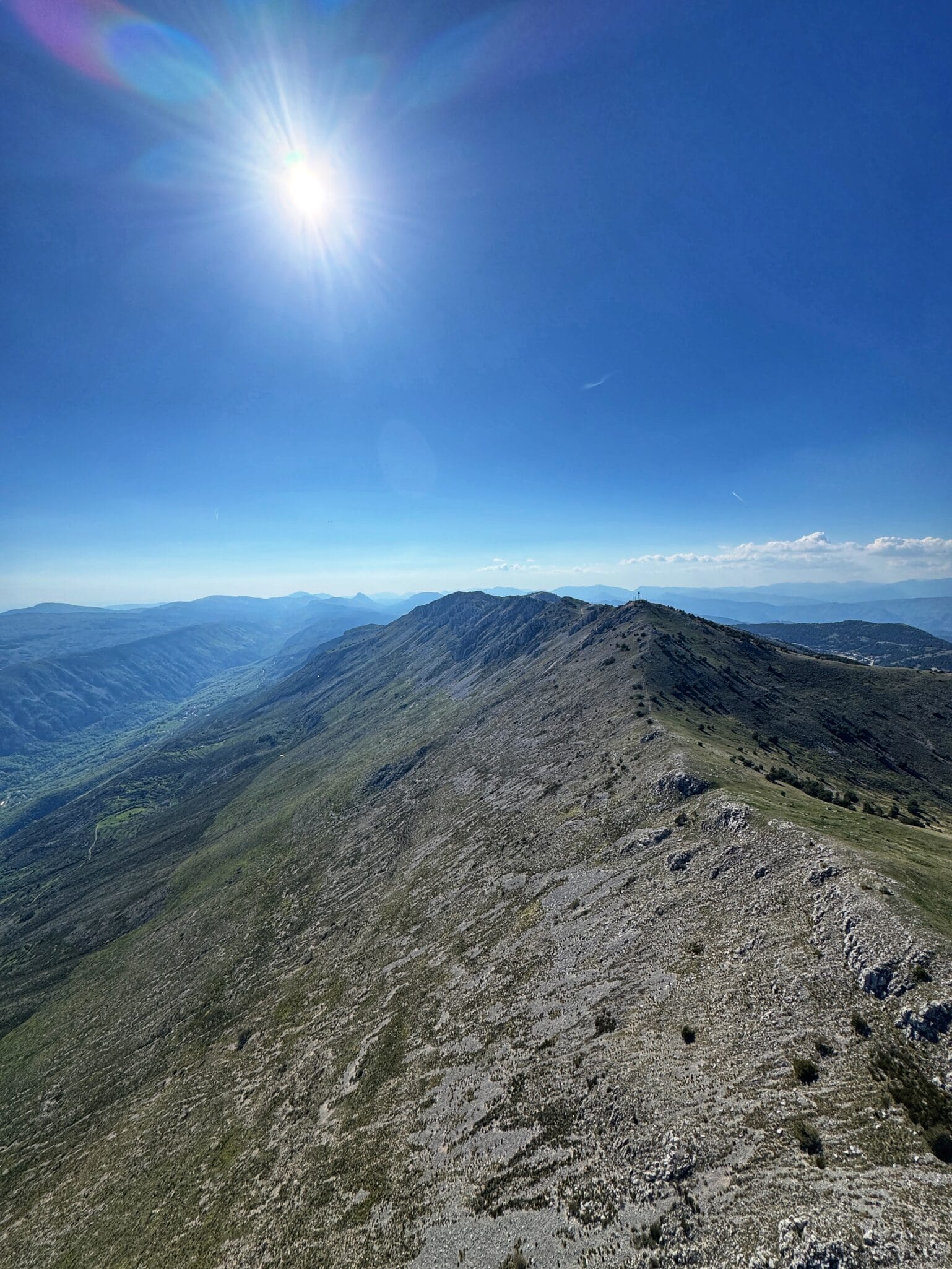
Panorama of the reliefs and ridges of the Alpes-Maritimes, a flying field Ailéments
Frequently asked questions

Your questions about paragliding regulations

Law, airspace Gréolières, equipment: concrete answers.

Do you need a patent, a license or insurance to fly?

Legally, no: in France, no diploma, licence, medical certificate or insurance It is not mandatory to fly. But in practice, schools and many sites require it, and common sense too. You fly freely, not unconsciously.

In what airspace can one fly?

Paragliding (classified as PUL) is only allowed in the areas designated for that activity. Classes E, F and G and in areas with the Vol Libre FFVL protocol. Prohibited in controlled airspace (TMA, CTR) and P/R/D areas. Overflight: 150 m above ground level, 300 m above agglomerations.

Why is the flight limited in altitude to Gréolières?

Because of the proximity of the'Nice Airport. Gréolières is under the TMA of Nice : the free flight is capped at around 1 990 m (FL 65) to avoid disturbing the planes. With an takeoff at about 1,400 meters, there is still plenty of room to fly.

Does the equipment need to be homologated?

The law does not require it, but it is highly recommended and required by schools. An approved wing (EN/LTF) has passed tests; one equipment Regularly revised remains safe. A sail that ages loses its qualities, which is why it is important to have it checked regularly. Revision.

What does the FFVL label of a school bring?

It is a benchmark of quality: it attests to respect for a specification regarding supervision, safety and equipment. To start, it is advisable to choose a serious structure, with state-qualified instructors (DEJEPS) and a real culture of security, is the best guarantee of a serene learning experience.

Can one fly anywhere and anytime?

No. Flights take off from suitable and authorized sites, respecting airspace, flight altitudes, and local restrictions (ceilings, sensitive zones, property of take-offs and landings), and according to the conditions and its level. The regulations set the framework; the pilot's judgment does the rest.

Written by the team Ailéments — paragliding instructors & canyoning

Paragliding school based in Gréolières (06) since 2013, affiliated with the FFVL. Our state-qualified instructors (DEJEPS) fly every day under the TMA of Nice and teach airspace, rules of flight and the proper use of equipment: for us, regulations are part of the profession.

DEJEPS Tutors Since 2013 FFVL Affiliates +1070 5/5 reviews
The essentials

Paragliding regulations: what you need to remember

Four guidelines for flying safely.

1

Free before the law, responsible in practice

There is no legal obligation to patent, license, or insure — but schools, sites, and common sense impose them. You fly freely, not unconsciously.

2

Airspace, on the other hand, is strict.

Classes E/F/G only, prohibited in TMA/CTR, 150 m above ground and 300 m above cities. The map is always checked before flying.

3

Gréolières ceiling ≈ 1,990 m (TMA Nice)

The proximity of Nice Airport imposes a ceiling around 1,990 m (FL 65). This allows for flying from a takeoff at 1,400 m.

4

Approved and revised equipment

EN/LTF standards, adapted to its level, and controlled regularly with our workshop Aerotech. Safety starts at ground level.

Flying freely, flying simply: it can be learned

Airspace, limits, equipment: during the course, regulations become a reflex, integrated into the pleasure of flying. Come learn how to do Gréolières it under the watchful eye of our DEJEPS instructors.

Discover our courses