


Child flight
100 €The ideal baptism to introduce the little ones to the magic of flight. Morning flights from 8 am to 10 am, in calm conditions and sensations adapted for children.
A unique way to improve: fly in a tandem glider with a state-certified instructor who analyses and corrects your flying technique in real time. Reading thermals, body positioning, flight paths along the mountainside, circling: 45 minutes to 1 hour of actual flight time above Gréolières, followed by a personalised debriefing. The ideal training for trainee pilots, at €250, video included.
 Educational flight · €250
Tandem instructional flights are a unique training method for pilots wanting to deepen their skills. Your instructor analyses and corrects your piloting in real-time during the flight, which is impossible in traditional schools where the instructor remains on the ground.
The passenger takes the controls You are actually driving, under the control of the monitor installed behind you.
The analysis and correction are done in real-time, during the flight, with immediate feedback on every action you take.
A thermal analysis course is included: You are learning to read the ascendant, interpret the wind's signs and coil cleanly.
The flight duration is exceptional: 45 minutes to 1 hour of air to have time to work on your weak points. Are you new to paragliding? Discover our first paragliding courses to learn the basics before moving on to instructional flying.
The introductory flight is for already initiated pilots who want to improve, not for complete beginners. If you have never flown before, start with a first paragliding experience (child, ascendant or prestige offer) to discover the sensations before undertaking real piloting training.
The training flight is intended for pilots learning to fly. You will perfect your flying with an experienced instructor: analysis of thermals, refinement of movements, and personalised debriefing. Accelerated progression, impossible to achieve from the ground.
HD video is included in the €250 price: your instructor films you with an onboard camera, and you leave with an SD card. Ideal for reviewing the flight at your leisure and analysing your progress at home, move by move.
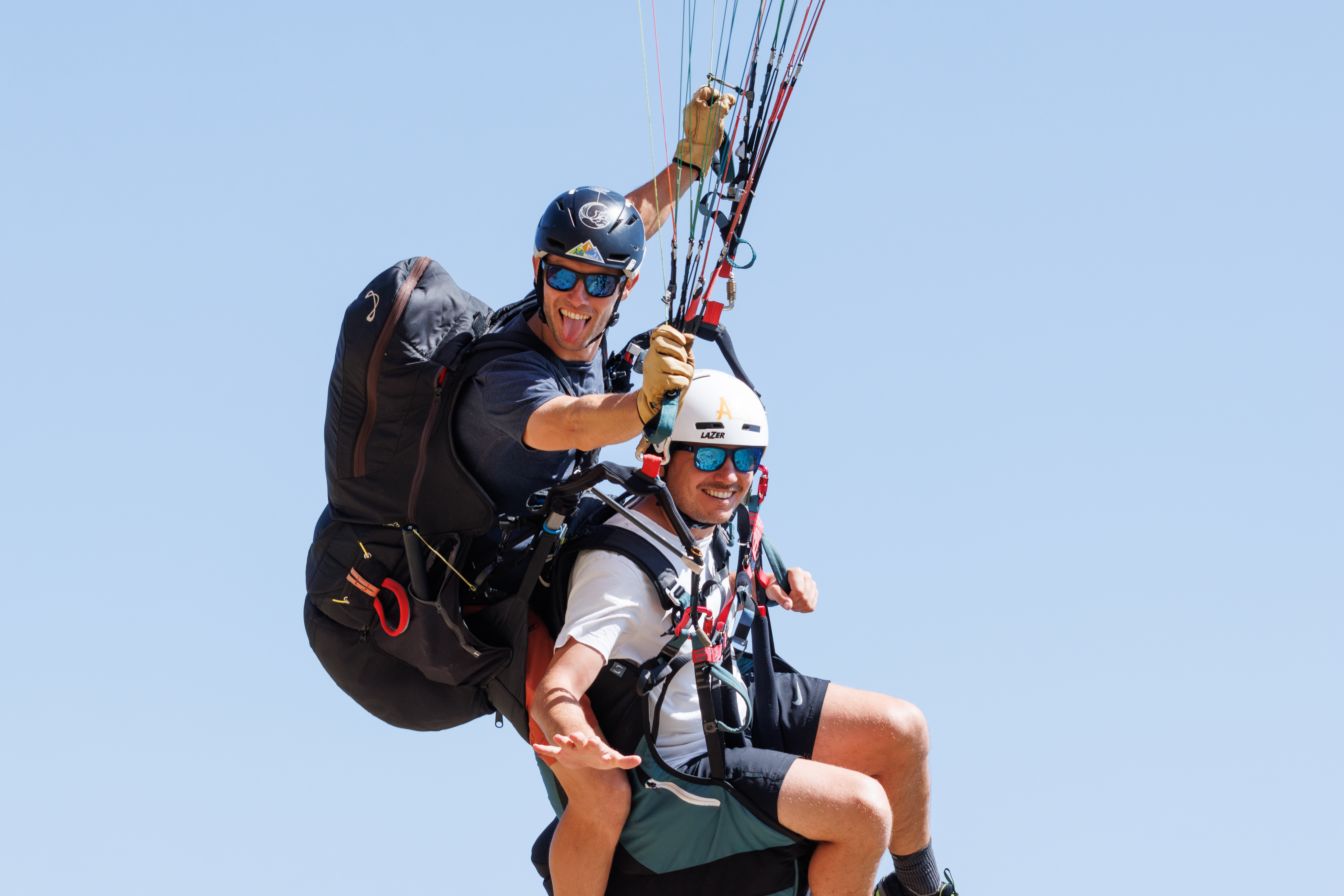
The learning flight is aimed at trainee pilots or qualified pilots wishing to progress. If you have never paraglided before, start with a taster flight before considering proper pilot training.
Pilots in training, qualified pilots looking to progress, and paragliding school students who want in-flight feedback.
To have previous paragliding flight experience. Basic knowledge of aerology is desirable, but the instructor will go over everything with you.
Maximum 90 kg for the passenger, to ensure comfort and safety with the school's tandem paraglider.
The training flight is built around your objectives, defined from the first contact and then refined the day before according to weather conditions. Each stage is designed to maximise what you will learn during the flight.
You leave with an SD card to review the flight and analyse your progress. Being able to re-examine your movements afterwards, sequence by sequence, is one of the best levers for a pilot's progression.
The introductory flight is an all-inclusive training experience, including video footage: at €250, there are no additional costs to consider. You pay for genuine working flight time, supervised by a qualified instructor.
We do a weather check every day at 8 PM. If conditions are not optimal for a work flight (too much wind, rain, storm), we will postpone your flight free of charge, with a voucher valid for 12 months.
The flight content adapts to your level and objectives. Here are the key skills your instructor will help you acquire or consolidate, hands-on.
You are learning to analyse conditions, interpret wind indicators and anticipate air behaviour around terrain.
Mastery of soaring techniques: centering the lift, managing the bank, and gaining altitude effectively.
You learn to adapt your lines along the mountain, to choose your routes and to exploit the terrain safely.
The monitor corrects your handling errors live: steering with the brakes, harness, control inputs.
The passenger truly pilots: you experience the manoeuvres yourself, with the safety net of the instructor behind you.
How to read a flight site, spot pitfalls and adapt your approach: knowledge transferable anywhere after the flight.
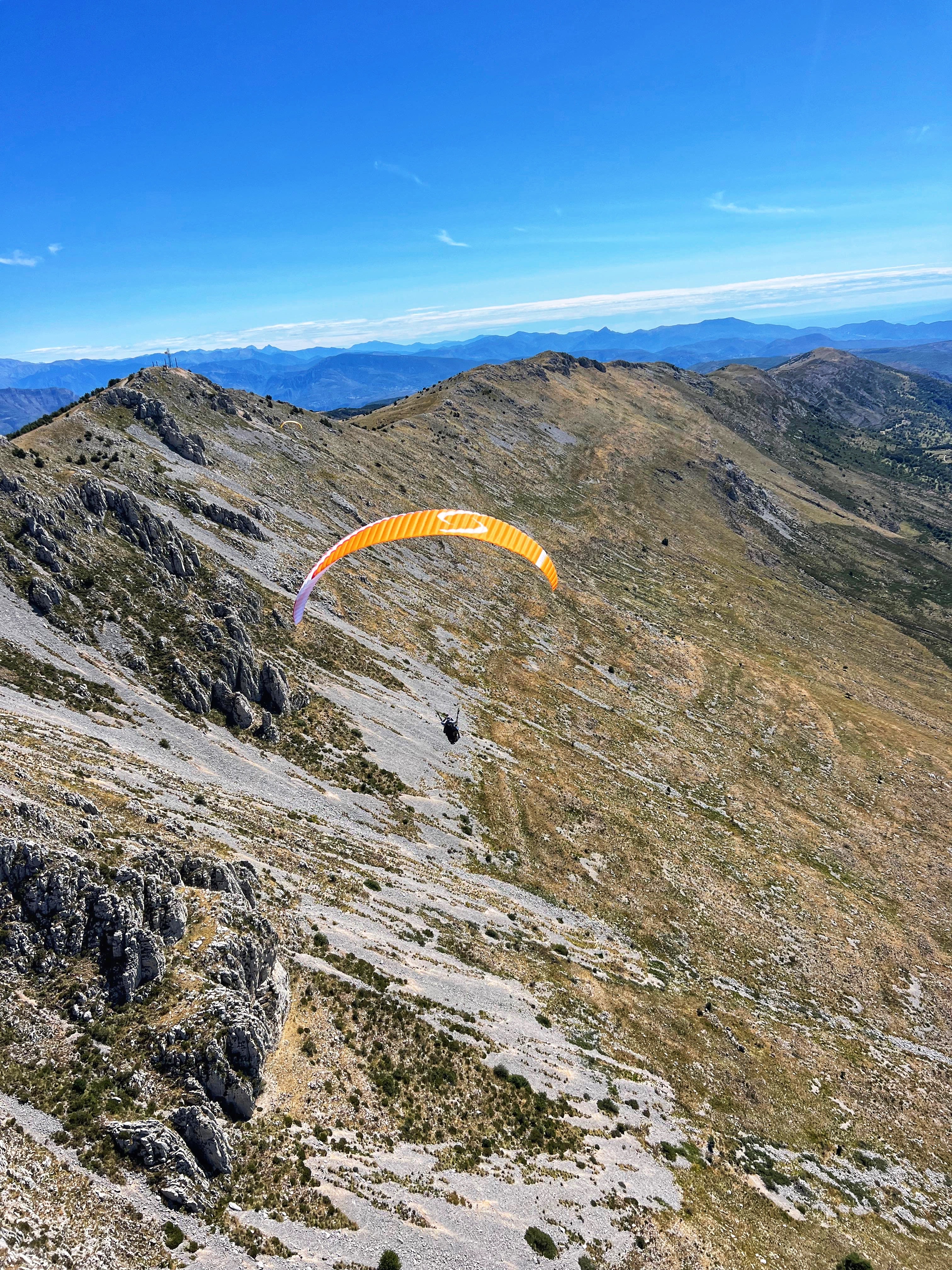
The Gréolières site, situated at an altitude of 1,800 metres on the ridges of the Cheiron, offers exceptional training conditions for learning to fly.
We have been flying at this site for many years. This in-depth knowledge of the area allows us to show you concretely how to analyse a flying site and adapt your trajectories. Accessibility: 45 minutes from Nice, 35 minutes from Grasse. To discover our playground, also browse our paragliding day at Gréolières and all of our paragliding flights.

A birthday, a hen or stag do, or simply the desire to treat an aspiring pilot? An introductory flight fits perfectly into our paragliding gift vouchers, valid for 12 months and customisable with a message.
The introductory flight is designed for pilots looking to improve their skills, but Ailéments offers a wide range of paragliding flights in the Alpes-Maritimes, from morning flights for children to paragliding and canyoning packages. All our detailed rates are public.
The ideal baptism to introduce the little ones to the magic of flight. Morning flights from 8 am to 10 am, in calm conditions and sensations adapted for children.
Our most requested package. The pilot uses thermals to extend the flight and offer you an exceptional panorama from Monaco to Cannes. Piloting and gentle acrobatics on request.
For trainee pilots. Analysis of your knowledge, correction of in-flight technique, and thermal analysis courses. Ideal for progressing quickly alongside a State-qualified instructor.
The ultimate experience. Long-distance cross-country flight over the Cheiron ridges to Coursegoules, acrobatic manoeuvres and HD video included. Spirals, stalls and adrenaline guaranteed.
Hike the GR4 to the summit of Cheiron (1770m), followed by a scenic flight over the Préalpes d'Azur. A unique blend of effort, contemplation, and adventure.
Two flagship activities in the Alpes-Maritimes in one day: paragliding in the morning, canyoning in the afternoon in the Canyon du Loup. The ultimate experience, unique to the French Riviera.
As well as offering training in two-seater aircraft, Ailéments also trains future solo pilots. Discover our paragliding courses, from discovery to refinement, supervised by state-certified instructors.
Required level, flight content, tandem interest, video included, and preparation: everything you need to know before booking your introductory flight.
The introductory flight is for learning pilots or qualified pilots wishing to progress. If you have never flown a paraglider, we recommend starting with a tandem flight (child flight, ascendant or prestige).
You will learn to analyse aerological conditions, interpret wind indicators, adjust your trajectories along the mountain, and master thermal soaring techniques. The instructor will correct your mistakes in real time.
Tandem instructional flights allow for real-time correction, which is impossible in traditional schools where the instructor is on the ground. You benefit from immediate feedback on every action.
Yes, HD video is included in the €250 price. You leave with an SD card to review the flight and analyse your progress at home.
Call us on 06 87 68 71 90 to discuss your level and your goals. We tailor the flight content to your specific needs. You can also Book your training flight online.
Perfect your flying with an experienced instructor. Analysis, live correction, personalised debriefing: a training flight is the most effective method for improvement, at €250 including video. Any questions? Call us on 06 87 68 71 90, we love to chat to personalise your experience. Weather cancellation = free postponement with a voucher valid for 12 months. To compare packages, browse all of our paragliding flights You are learning to fly alone thanks to our paragliding courses.




